By Dr Rahim Said
Before politicians rush to launch another grand blueprint, perhaps they should pause and study one of the oldest development models ever conceived.
It has no flashy logo, no catchy slogan, no election manifesto, and certainly no ribbon-cutting ceremony every five years. Yet for more than a thousand years, it quietly built universities, hospitals, schools, libraries and even entire cities.
Its name is waqf.
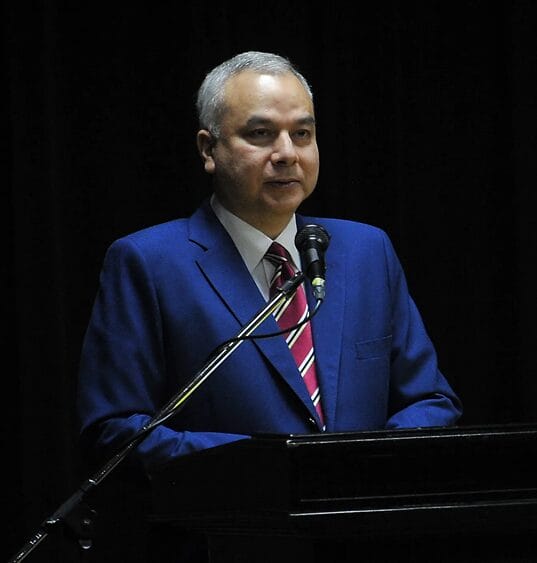
In a speech that deserves to be read beyond convention halls, Sultan Nazrin Shah reminded Muslims that waqf is not merely about donating land for a mosque or cemetery. It is about creating wealth that never retires from serving humanity.
As His Royal Highness aptly described it, waqf is “an investment whose dividends are paid in the Hereafter.”
That is probably the only investment guaranteed to outperform every stock market, cryptocurrency and property boom because its returns continue long after the original investor has departed this world.
Imagine telling your financial adviser that your investment portfolio matures only after your funeral. He would probably suggest you seek another adviser.
Yet that is precisely the genius of waqf. It challenges a modern obsession with immediate gratification. Today’s society measures success by quarterly profits, annual bonuses and social media likes. Waqf measures success by whether your good deeds are still benefiting strangers a hundred years after your name has faded from memory.
It is perhaps one of Islam’s most revolutionary economic ideas.
The Sultan of Perak reminded delegates how Caliph Umar’s land at Khaybar became a perpetual charity, how Fatima al-Fihri used her inheritance to establish the University of Al-Qarawiyyin — still educating minds more than eleven centuries later—and how Gazi Husrev Bey’s endowments continue serving Sarajevo nearly 500 years after his death.
Talk about a development plan with measurable outcomes. Compare that with some of our modern mega-projects that barely survive until the next election before requiring another “revitalisation programme.”
His Majesty also highlighted an uncomfortable truth. Too much waqf property today is sleeping.
Across the Muslim world lie parcels of land caught in legal disputes, neglected by administrators or buried beneath mountains of paperwork. Some trustees appear to believe “perpetual” refers not to the charity but to the delay in managing it.
There are waqf lands that have become experts in growing lalang, but very little else. If land could speak, some waqf plots might ask, “Did someone forget we exist?”
The Sultan’s reminder that governance itself is an act of worship could not have been more timely. Keeping accurate records, ensuring transparency and professionally managing endowments are not merely administrative chores. They are acts of amanah.
His warning carried a subtle but powerful sting. A government auditor might miss irregularities. Allah does not.
That sentence alone should make even the most complacent trustee sit a little straighter. Perhaps the greatest lesson from the speech is that waqf is not frozen in medieval history.
Some mistakenly imagine waqf belongs in dusty history books alongside camel caravans and handwritten manuscripts. Far from it.
Indonesia is already demonstrating how waqf forests help conserve the environment. Solar-powered schools funded through green waqf show that Islamic philanthropy can illuminate classrooms while reducing carbon emissions. Digital cash-waqf platforms now allow contributors to monitor where every ringgit goes.
The smartphone, it seems, can become an instrument of sadaqah as easily as it can deliver endless cat videos.
Even Malaysia has experimented with corporate waqf and innovative financing structures. These should not remain isolated success stories but become mainstream models.
The beauty of waqf is that it democratises legacy. One need not be a billionaire.
History shows that many enduring waqf institutions were established by ordinary believers who simply wished to leave something behind that mattered.
A modest contribution, professionally managed and combined with thousands of others, can educate children, treat patients, preserve forests or provide clean water for generations.
In an age where influencers compete over who owns the biggest mansion or the newest supercar, waqf quietly asks a more profound question.
When your final chapter is written, what will still be working because you once lived? The answer cannot be measured in bank balances or property portfolios.
As the Prophet Muhammad (peace be upon him) taught, deeds cease after death except three: ongoing charity, beneficial knowledge and righteous children who pray for their parents.
Waqf beautifully combines at least two of those three.
Perhaps that explains why Sultan Nazrin described it not simply as charity but as civilisation in motion.
His call is not merely for Muslims to donate more. It is for us to think differently.
To stop asking, “What can my wealth buy for me today?” and begin asking, “What can it continue doing after I am gone?” That is a remarkably radical question in an age obsessed with consumption.
It is also deeply liberating. For in the end, the greatest inheritance is not what we leave to our children. It is what we leave for society.
And if Sultan Nazrin’s timely reminder inspires even a fraction of Malaysians to revive the true spirit of waqf, the rewards will not only transform communities here on earth.
According to the promise of faith, the biggest dividend statement may well arrive in the Hereafter, where, unlike earthly investments, the account never closes.
WE