By Phillip Das
“A town does not lose its values in a single generation. It loses them one decision at a time.” — Phillip Das
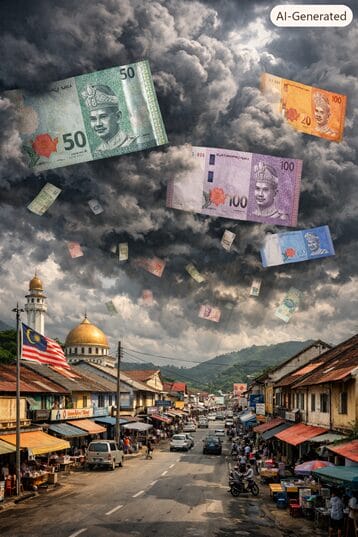
People often ask what happened to our town. There was a time when neighbours left their doors unlocked because trust was stronger than fear. A promise carried the weight of a written agreement.
Shopkeepers measured honestly. Builders took pride in their work. Public servants understood that they existed to serve the people, not themselves.
People lived peacefully together, respecting one another without regard to colour, race, or creed. We were never a wealthy town.
But we were a trusted one. Then, slowly, something began to change.
No one can point to the exact day it happened. There was no great crisis or dramatic turning point. Instead, the change came through countless small decisions that seemed insignificant at the time.
A businessman offered a little extra to move an application ahead of others. Someone accepted it because it seemed harmless.
A contractor chose cheaper materials, believing no one would ever notice. Parents taught their children that bending the rules was simply how the world worked.
Students discovered that copying was easier than learning. Positions of responsibility and opportunity were sometimes awarded through influence rather than merit.
Each decision appeared too small to matter. No one set out to become dishonest.
People simply convinced themselves that one small compromise would make no difference. But compromises rarely remain small.
They multiply. Before long, people no longer expected fairness. They expected favours.
Integrity was applauded in speeches but quietly ignored in daily life. Those who refused shortcuts were considered naïve.
Those who bent the rules were admired for being clever. Corruption seldom begins with great crimes. It begins the moment we convince ourselves that doing what is wrong is acceptable because it benefits us.
It begins with the little lie. The small favour.
The silent acceptance of what we know is wrong. It begins when we stop asking, “Is this the right thing to do?” and ask only, “Can I get away with it?”
Many blame politics for the decline of a nation. Yet politicians do not appear from nowhere. They are chosen by the people. They are raised in homes, educated in schools, shaped by their communities, and influenced by the values they see every day.
If we hope for honest leaders, we must first become honest families. Others believe the problem is a lack of religion.
Yet every great faith teaches honesty, justice, compassion, humility, and integrity. The problem is not the absence of moral teaching.
It is the absence of moral practice. Lasting change has never come through speeches alone. It begins in ordinary places.
A family choosing honesty over convenience. A teacher refusing to compromise. A business placing integrity above easy profit. A public servant remembering whom they serve. A young person deciding that character is worth more than success gained dishonestly.
A nation is not transformed simply by new laws or new leaders. It is transformed when ordinary people decide that doing what is right is no longer negotiable.
The future of any nation is not determined solely by those who govern. It is shaped every day by the values its people choose to live by.
The future of our town was never held in the hands of a powerful few. It has always rested in the daily choices of ordinary men and women.
Corruption does not begin in Parliament, the marketplace, or the courtroom. It begins wherever conscience falls silent.
And hope begins the moment conscience finds its voice again. Perhaps the question was never how our town lost its way.
Perhaps the greater question is whether each of us is willing to help it find its way home.
The views expressed here are entirely those of the writer
WE