Image Credit: Copilot
By Dr Rahim Said
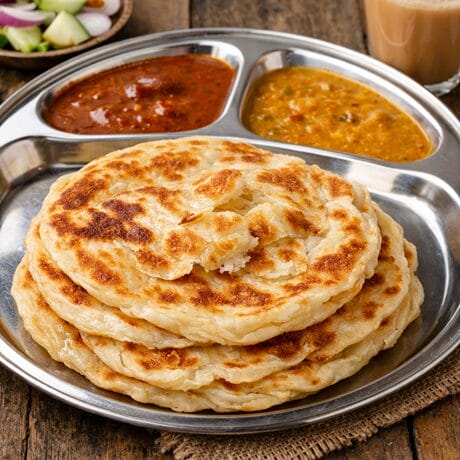
Malaysia has survived communists, currency crises, political frogs, Sheraton Moves, and countless debates over whether pineapple belongs on pizza. Yet nothing has tested our national resilience quite like the recent MasterChef scandal involving the pronunciation of roti canai.
For those who somehow missed this diplomatic incident, Malaysian-American contestant Jaime Tan won a challenge on MasterChef: Global Gauntlet with a dish featuring roti canai. Unfortunately, she pronounced it “roti kanai.”
The food was excellent. The judges loved it. Gordon Ramsay approved. But alas, she had committed the cardinal sin of phonetics.
The reaction was swift. Not because she burned the roti. Not because she insulted Malaysian cuisine. Not because she substituted sambal with ketchup.
No. She misplaced a vowel.
In fairness to the outraged masses, pronunciation matters. Languages carry identity. Food carries memory. Every Malaysian has a deeply personal relationship with roti canai, usually conducted at 7am over teh tarik and complaints about politicians.
Yet one cannot help feeling a touch of sympathy for poor Jaime.
She is, after all, a Malaysian-American raised thousands of miles away from the nearest mamak stall. Her family roots remain firmly Malaysian. She proudly carried Malaysian flavours onto an international stage. She won. Then she discovered that victory in a cooking competition does not necessarily protect one from a tribunal of amateur linguists armed with social media accounts.
Linguistically speaking, the controversy is fascinating.
The word “canai” itself has long generated debate among language enthusiasts. Depending on where one grew up, one might hear subtle differences in pronunciation. Some hear “cha-nai,” others “cha-nay.” The International Phonetic Alphabet — that terrifying collection of symbols invented by people who enjoy correcting everybody else — can spend pages describing sounds most Malaysians simply learn by osmosis while waiting for their breakfast.
The irony is that English speakers routinely massacre foreign words with cheerful confidence.
The French have endured centuries of hearing their language tortured by tourists. Italians have watched “bruschetta” transformed into “broo-shetta.” Americans continue to wage war against “croissant” with varying degrees of collateral damage.
Yet nobody convenes emergency national councils every time someone says “parmesan” incorrectly.
Malaysia, however, treats roti canai with the reverence other nations reserve for constitutional documents.
Perhaps because roti canai is more than food. It is one of the few things that genuinely unites Malaysians. Rich or poor, left or right, urban or rural, everyone understands the emotional significance of a perfectly flaky piece of dough accompanied by curry.
Mispronouncing it therefore, feels, to some ears, like singing the national anthem with the wrong lyrics. Still, there is a distinction between mockery and mistake.
Jaime Tan was not ridiculing Malaysia. She was celebrating it.
Indeed, there is something wonderfully Malaysian about her defence that she can open a durian with her bare hands.
That statement alone should probably qualify her for citizenship renewal, honorary membership of a Johor kopitiam association, and perhaps a minor government appointment.
Besides, if pronunciation were the ultimate test of belonging, many Malaysians would find themselves in serious trouble.
We are a nation that cheerfully mixes Malay, English, Mandarin, Tamil, Hokkien and whatever else happens to be available at the time. We have collectively created a linguistic ecosystem where grammar occasionally surrenders and vocabulary becomes a democratic free-for-all.
The average Malaysian conversation can contain five languages within a single sentence and still somehow make perfect sense.
In such circumstances, becoming overly doctrinaire about phonetics feels rather ambitious.
Perhaps the real lesson is that identity is not measured solely by pronunciation. It is measured by affection.
Jaime Tan carried Malaysia onto an international stage. She cooked Malaysian food with pride. She spoke about her family’s kopitiam roots. She felt the weight of representing a country that many overseas Malaysians never stop missing.
And then she apologised.
That seems more than enough.
After all, some people have spent decades in Malaysia and still cannot distinguish between “your” and “you’re.”
Yet somehow we continue to love them. So let us grant Jaime Tan amnesty.
The Republic of Roti Canai has suffered no permanent damage. The dough remains intact. The curry still flows. Civilisation endures.
And if Gordon Ramsay liked the roti, perhaps the rest of us can spare a little less outrage and a little more kuah dhal.