By Phillip Das
“A town loses its heart not when it grows larger, but when its people begin to matter less to one another.” — Phillip Das
There was a time when a town was known not by its buildings, but by its people. If someone fell ill, neighbours came before the ambulance did. They brought food, sat through the night, looked after the children, and quietly did whatever needed to be done.
No one asked whose responsibility it was. They simply cared.
When a young family was finding life difficult, they did not have to ask for help. The community saw their need and responded. People understood that kindness was not measured by how much they gave, but by their willingness to care.
When a child misbehaved in the street, the elders offered guidance. Parents were grateful because every child was seen as part of the community. Respect was not demanded.
It was lived.
Doors were seldom locked during the day. A neighbour could walk in through the back door and wait for you to return. No invitation was needed because trust was stronger than fear.
When a baby was born, the town celebrated together. When someone passed away, the town mourned together. No one measured the inconvenience of being present. They measured the importance of being there.
Then the town began to grow.
The roads became wider. Cars replaced bicycles. Houses became larger, and buildings occupied the open spaces where children once played. Businesses flourished, and opportunities increased.
Progress brought many blessings. But quietly, something precious began to disappear.
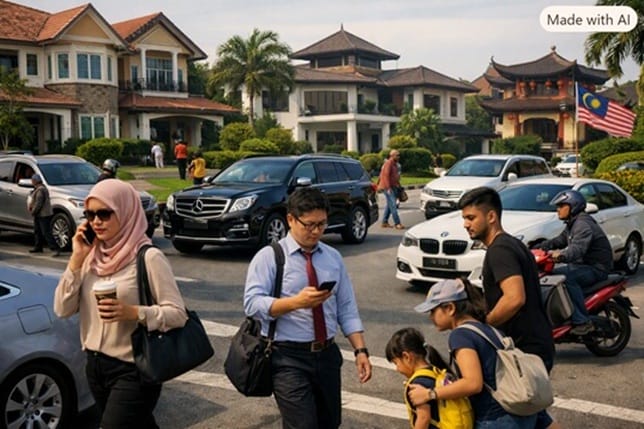
Today, we may know the registration number of our neighbour’s car, but not their name. We send messages instead of visiting. We say, “We must catch up soon,” yet months and sometimes years pass without truly knowing the people who live around us.
We build higher fences and stronger security systems, yet many people have never felt more alone. The town did not lose its heart because it changed.
Change is part of life.
The town lost its heart when people began to forget that every person around them carried their own struggles, hopes, and stories.
Somewhere along the way, compassion became optional, and community became an event instead of a way of life.
A town can survive without old buildings. It can survive without familiar streets. But it cannot truly flourish without a caring heart. That heart is not found in bricks or concrete.
It is found in the people who choose kindness over indifference, understanding over judgement, and unity over division. Perhaps the question we must ask ourselves is this:
Have we allowed progress to take away the very things that once made our town special?
Because the heart of a town is not found in its streets. It is found in its people, regardless of colour, creed, or background, who walk those streets together, united by kindness, respect, compassion, and a shared sense of belonging.
Perhaps it is time to go back, not to the old roads or the houses we once knew, but to the values that made a town feel like home.
Let us care for our neighbours, show kindness without being asked, and remember that every person matters. For when we care for one another, the heart of the town begins to beat again. Let’s go back to the times when we cared.
WE