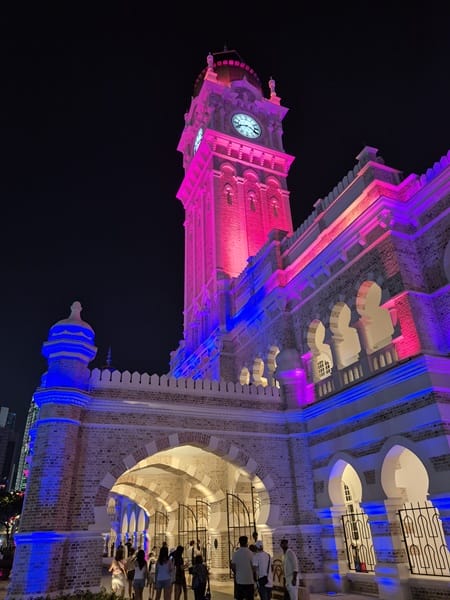
The newly refurbished Bangunan Sultan Abdul Samad glows majestically in the night
By Leslie Lim
There is a familiar refrain among Klang Valley residents whenever a lazy weekend rolls around: “There’s nothing much to do in KL” or “Anything new in KL meh?”
There is an irony here. Many of us travel into Kuala Lumpur every weekday for work or business, yet seem far less inclined to return during weekends or holidays.
Perhaps we have become so used to seeing KL as a place to work and run errands that we overlook its appeal as a city to explore. Traffic and parking woes only add to the reluctance.
Yet KL has changed considerably. Part of its appeal lies in the way old and new sit alongside each other. Restored heritage buildings, traditional street life, modern landmarks and green spaces come together to give the city its own distinct character.
For many locals, however, a trip into KL still means heading to familiar shopping malls or catching a movie. There’s nothing wrong with that, of course, but there is plenty more to discover beyond the retail and entertainment centres.
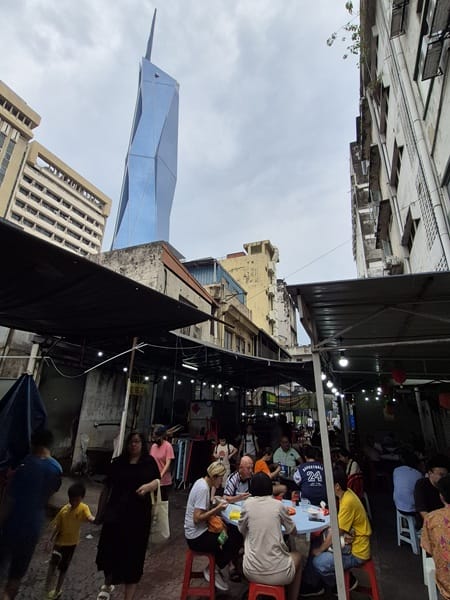
A new landmark towers above the city — Merdeka 118 — it’s also the world’s second tallest skyscraper!
Transforming KL
KL’s appeal is not just about shiny new landmarks. Some of its older attractions are also getting a new lease of life.
Through initiatives such as Warisan KL, historic assets are being brought back to life. Stadium Merdeka has reopened, with its restored 400-metre track now available for public use, while Seri Negara at Carcosa has been revitalised.
Old Market Square at Medan Pasar is another example of how KL’s historic public spaces are being given a new lease of life.
Across Dataran Merdeka, the Sultan Abdul Samad Building remains a landmark worth admiring. It looks different after dark, when its illumination gives it another charm. Green spaces such as the popular KLCC Park and Taman Perdana also offer welcome breathing room amid the concrete.
These are places that often remind us there is more to KL than shopping malls, office towers and commercial hubs.
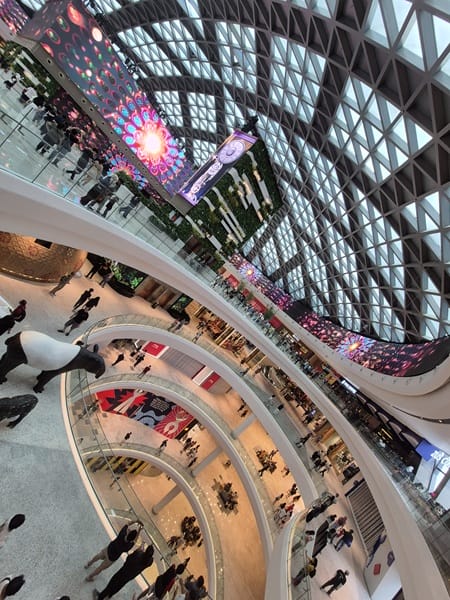
Plenty of new malls to choose from
A More Connected City
Getting around KL has also become easier, thanks to the expanding rail network and affordable travel options.
For decades, tolls, parking fees and traffic have put off suburban residents from venturing into the city. Today, the MRT and LRT networks, together with monthly travel options such as the My50 pass, make getting around considerably easier and cheaper.
Perhaps our relatively affordable petrol has also made us a little too comfortable behind the wheel. With BUDI95 keeping fuel costs low, some of us may find it easier to fill up the tank than to hop on a train.
From busy stations such as Pasar Seni, Masjid Jamek, KLCC and Bukit Bintang to newer additions such as TRX and Merdeka, the network puts more of KL’s commercial, retail and cultural attractions within reach.
I must admit I was a late convert to rail transit. Despite living a short walk from my local MRT station, I only took my first ride early this year, almost a decade after the line began operating.
That first ride encouraged me to explore further. On a subsequent trip to Batu Caves, I took the MRT to Pasar Seni, walked to the adjoining KTM Komuter station and continued by train practically to the doorstep of the caves. It was a good reminder that different rail services can work together to make journeys beyond the city centre easier.
Of course, first and last-mile connectivity remains a challenge in many suburban neighbourhoods. But once in the city, taking the train can change how we experience it.
Instead of circling congested streets looking for parking, we can head for nasi kandar in Jalan Tuanku Abdul Rahman, Chettinad banana leaf dining at a traditional mess (Lebuh Ampang), or even Soong Kee beef noodles (Jalan Tun HS Lee), without worrying about parking.
There is something in it for local businesses too. More people arriving by public transport means more potential customers for traditional traders and small businesses. The extra foot traffic can bring more life to KL’s heritage districts.
The Pedestrian Experience
Getting people into the city is only half the battle. They must also be able to walk comfortably and safely between attractions.
Exploring on foot allows us to linger and discover places that driving might pass by. In Malaysia’s hot, humid climate, however, the quality of the walking environment matters. A short walk can be enjoyable, but not when it feels like an endurance test under the afternoon sun.
DBKL’s plan to build 22km of covered walkways across KL, backed by RM55 million and scheduled to begin next January, is welcome. Another 20km is also planned for the city centre. In a city prone to sudden downpours, covered walkways can make the difference between a pleasant stroll and an uncomfortable one.
But infrastructure alone is not enough. Around some transit nodes, littered cigarette butts, inadequate public bins and maintenance problems point to shortcomings in enforcement and upkeep.
A more visible police presence, including Tourist Police patrols around busy transport hubs, would also reassure commuters and visitors. People are more likely to linger when public spaces are clean, safe and welcoming.
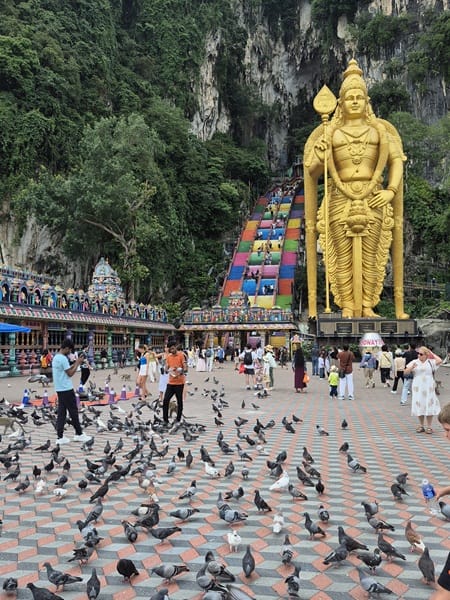
Not only tourists come to Batu Caves — pigeons, too!
Overcoming Public Perception
For Petaling Jaya residents and other Klang Valley suburbanites, a trip into the city need not be a stressful expedition. Take an off-peak morning train, explore a revitalised heritage precinct, do some window shopping or enjoy a leisurely lunch, then head home before the evening rush.
Honestly, KL was never truly boring. Perhaps we have mistaken the inconvenience of getting into the city for a lack of things worth discovering, while taking our own capital for granted.
With KL continuing to evolve, perhaps it is time to rethink our car-centric habits, leave the car keys behind and rediscover the city from a different perspective.
After all, sometimes all it takes is one train ride to realise what we have been missing. And perhaps, one train ride at a time, we might rediscover a city we thought we already knew.
WE