By Dr Rahim Said
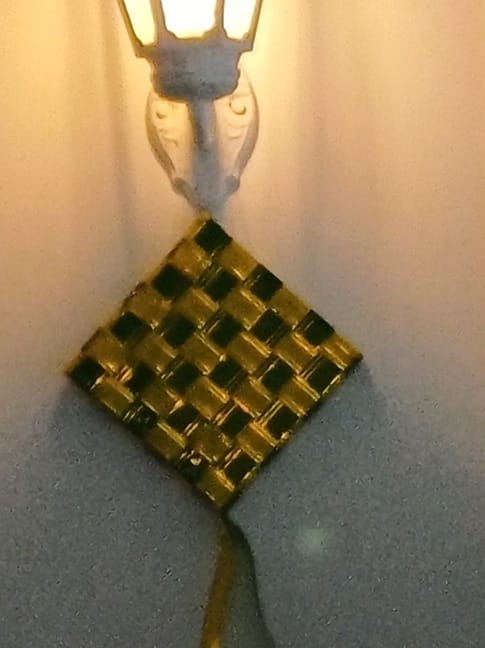
There it hung — a solitary ketupat on the wall — looking less like a proud herald of Aidilfitri and more like a forgotten prop from last year’s storage box that someone remembered to hang out of guilt rather than enthusiasm.
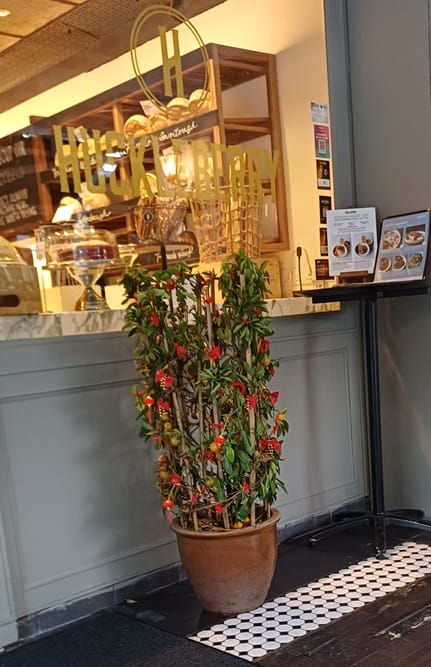
Weeks too early to be festive, yet already tired in spirit, it dangled at my favourite café in Bukit Damansara like a polite RSVP to a party no one is in a rush to attend.
On the floor below, two dried orange plants stood like exhausted extras who had overstayed their scene. Their leaves curled in quiet resignation, their once auspicious fruits now shrivelled into the botanical equivalent of yesterday’s headlines. Chinese New Year, it seemed, had already been packed away emotionally — even though the lunar calendar insisted it was barely a week old.
And this, I thought as I stirred my coffee, is perhaps the most honest portrait of how we celebrate culture in modern Malaysia: not by devotion, nor by meaning, but by shelf life.
Because if you really want to understand our hierarchy of festivity, don’t look at sermons or speeches. Look at the decorations.
Christmas, for instance, enjoys a marketing lifespan that rivals a political career. It arrives early, stays long, and leaves reluctantly — like an expatriate who fell in love with Bangsar and refuses to go home.
In malls like Pavilion, Christmas is not merely celebrated; it is curated, choreographed, and elevated into a theatrical spectacle of snowflakes, chandeliers, orchestras, and artificial pine trees that probably cost more than some small town budgets.
Even at this café — which I’ve faithfully patronised for a decade — Christmas décor has always been magnificent. Elegant, tasteful, and just indulgent enough to make you feel you should order a second pastry out of gratitude.
Then comes Chinese New Year, sliding in quietly behind the dismantled Christmas trees like a tenant moving into an apartment whose previous occupant left the curtains and the carpet intact. A few lanterns appear, some oranges are arranged, perhaps a couple of red ribbons tied with practical efficiency rather than artistic zeal — functional festivity.
And Aidilfitri? Well, Aidilfitri seems to get the minimalist treatment — a ketupat here, a green ribbon there, as though the decorator whispered, “Let’s not overdo it.”
Of course, no café owner would ever admit to prioritising one celebration over another. In fact, they would rightly insist this has nothing to do with religion, sensitivity, or bias.
They would say — correctly — that it’s about commerce.
Christmas sells aspiration. Chinese New Year brings prosperity. Aidilfitri sells… homecoming.
And homecoming, unlike aspiration or prosperity, does not require elaborate props. You cannot monetise nostalgia as easily as you can monetise glitter.
This is the unspoken arithmetic of festive decoration: the more photogenic the celebration, the longer its commercial lifespan. Christmas decorations invite selfies. They create Instagram moments. They encourage customers to linger, to post, to tag, to advertise on behalf of the establishment without being paid a sen.
A ketupat, by contrast, is humble. It does not sparkle. It does not glow. It does not whisper “Take a picture of me.”
It simply hangs — like tradition itself — patient, understated, and somewhat taken for granted.
So perhaps what I saw that morning was not neglect, but honesty. Because commercial spaces do not reflect spiritual priorities. They reflect consumer behaviour.
They decorate not according to devotion, but according to revenue projections.
And in that quiet café corner, between a lonely ketupat and two dying orange plants, I realised something slightly uncomfortable: the real national festival is not Christmas, not Chinese New Year, and not Aidilfitri.
It is the perpetual celebration of what sells. Everything else, like those dried mandarin trees, simply waits its turn to be swept away when the next profitable season arrives.