By Leslie Lim
Any debate about nasi lemak, including the quest for the “best in town,” is guaranteed to raise eyebrows. The latest “dispute” is no exception: the Nanyang Coconut Rice controversy. An attempt at rebranding by certain fusion cafes in Singapore went viral for all the wrong reasons.
While it was meant as a “premium” move, it was widely dismissed on both sides of the Causeway as nothing more than a marketing gimmick.
The food rivalry between Malaysia and Singapore has effectively become a “national sport.” This constant tug-of-war is rooted in our shared history and cultural heritage.
Many will recall the “bash” when McDonald’s Singapore launched its nasi lemak burger in 2017. It was later introduced to the Malaysian market in 2018 as a seasonal item after its viral success in Singapore.
There have been equally bitter debates over the origins of yee sang, bak kut teh, chilli crab, and Hainanese chicken rice. Even the humble cendol became a flashpoint when CNN credited Singapore as having one of the world’s top desserts, much to the annoyance of Malaysians.
Nasi Lemak has come a long way from its deep Malay roots to become our favourite staple breakfast, and even lunch and dinner today.
Because it appeals to everyone, nasi lemak has evolved with a wide range of side dishes and more standalone Nasi Lemak chains.
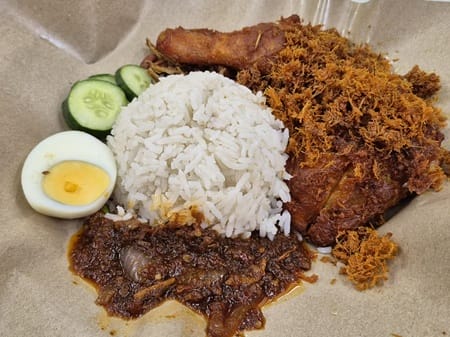
Today, Chinese, Peranakan, and Indian versions are also widely available. The true “heartbeat” of any Nasi Lemak is the sambal. Period.
Much like rendang, the flavour profile of Malay sambal – ranging from savoury to sweet – shifts significantly as you travel from the North to the East and South of the peninsula to East Malaysia.
Similarly, Chinese and Indian versions are easy to tell apart through their use of spices and ingredients for the sambal and their unique side dishes.
Regional differences also play a big part. For example, you won’t usually see this in KL or PJ, but Nasi Lemak in the northern states is often served with Sambal Ikan Talang Masin.
Another distinct difference is the use of kangkung. While it is a standard, instead of a cut cucumber in the southern states and Singapore, it is often missing in other parts of the country.
This incredible diversity is exactly why it is nearly impossible to vote for a single favourite nasi lemak. For some people, the best Nasi Lemak is home-made, featuring a jealously guarded sambal recipe made to an acquired taste, and rich santan for the fluffy rice.
When an iconic food item like nasi lemak has so many regional and cultural versions, the “perfect” plate is really just a matter of personal preference.
It ultimately comes down to how you like your sambal: do you want a savoury, fiery punch, or do you prefer a sweeter finish?
WE