By Dr Rahim Said
It was the eve of Lunar New Year — that sacred annual moment when highways jam, supermarkets empty, and WhatsApp groups suddenly rediscover the ancient Chinese tradition of forwarding the same glittering GIF to 327 contacts simultaneously.
I had just landed from Bali, still smelling faintly of airplane air and duty-free perfume, when I called a friend. A simple question. Almost ritualistic.
“Eh… what are you doing for reunion dinner?”
His answer came quickly, almost too quickly.
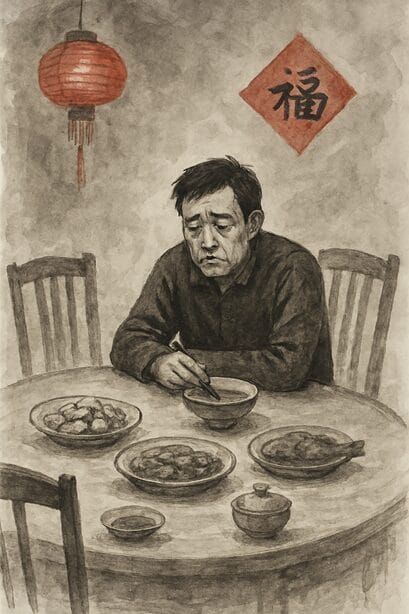
“Nothing lo.”
There was no drama in his voice. No complaint. Just something softer — a hollow note that people of a certain age learn to recognise instantly. Loneliness rarely shouts. It whispers.
So, I said, “Then we makan together lah. I’m on the way home — can reach before six.” “Okay,” he replied.
Just like that. No hesitation. Because sometimes what the lonely fear most is not rejection — it is silence.
The New Shape of “Reunion”
Later I learned the backstory. He had celebrated reunion dinner — just not on the official night.
His only daughter and grandchildren came the day before. They had to. On New Year’s Eve they would join her husband’s family. This is modern reality.
Reunion dinners now operate like airline schedules — subject to availability, negotiated months in advance, occasionally overbooked, and sometimes rescheduled to accommodate competing loyalties.
The ancient ideal was simple: One big table. Three generations. Everyone present.
Today’s version is more… logistical. Split schedules. Rotating obligations. Calendar diplomacy is worthy of a foreign ministry. No one is to blame. Life has simply become complicated. But complexity has a cost.
The Quiet Demographic No One Talks About
Every festive season reveals a hidden population. Widowers. Widows. Singles whose children live overseas.
Parents whose families now exist mostly inside smartphones. They are everywhere — in condos, terrace houses, retirement villages, and sometimes in very large homes that echo too loudly.
Their stories rarely make headlines because they are not dramatic. No scandals. No protests. No viral videos.
Just empty chairs at dinner tables. And perhaps the most painful part — they often insist they are “okay.”
The Loneliness of Survivors
My friend lost his wife five years ago. That kind of loss does something subtle to a person. It does not merely remove a companion.
It removes:
• The shared jokes nobody else understands
• The unspoken routines
• The quiet assurance that someone will always be there at day’s end
When one partner dies, the survivor doesn’t just lose a person. They lose a witness to their life. Festive seasons amplify this absence.
Because every ritual — from buying mandarin oranges to setting the table — carries memories of someone who used to be part of the scene.
Why Festivals Hurt the Most
Ironically, celebrations can be the loneliest times of all. Because society sends a very loud message: “Everyone is happy today.”
Which makes those who are not feel like outsiders to joy itself. On ordinary days, loneliness blends into routine. But on reunion night, it sits at the table like an uninvited guest.
The Quiet Power of Friendship
That is why a simple phone call matters more than we realise. Not a grand gesture. Not charity. just companionship.
Two people eating together, sharing stories, laughing about old times, and pretending — if only for a few hours — that the world is still whole.
In Asian culture, we talk endlessly about filial piety and family bonds. But modern life teaches another truth: Friends increasingly become the family we choose — especially in old age. And unlike relatives, friends come without obligations. Only willingness.
A Gentle New Year Wish
So, as the current festive nights are set aglow by fireworks and dining tables overflow with abundance, spare a thought for those whose celebrations are quieter. Call someone. Invite someone.
Even a short visit can change the emotional weather of an entire evening. Because loneliness is not always solved by grand solutions.
Often, it is eased by small acts: A phone ringing. A seat is offered.
A simple question: “Have you eaten?”
A Different Kind of Reunion
As for my friend and me, our reunion dinner was modest. No elaborate dishes. No ceremonial toasts. Just conversation.
But in its own way, it was deeply meaningful. Because reunion, at its heart, is not about tradition. It is about connection.
And sometimes, two people sharing a meal can be just as powerful as a table filled with 20. So, to all who find themselves facing these festive nights alone:
May you discover comfort in friendships near and far. May your phones ring. May your doors open.
And may the Year of the Horse gallop into your life carrying not just prosperity — but companionship.
WE