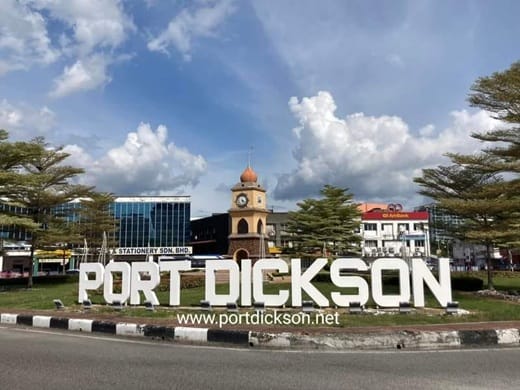
Image Credit: Port Dickson FB
By Leslie Lim
“Nak pergi PD?” or “Bila nak pergi PD lagi?” Ask either question today, and you’ll likely be met with lukewarm indifference. And for good reason.
Gone are the glory years of the 1970s to early 90s, when Port Dickson stood as one of the prime beach destinations on the west coast of the peninsula, dotted with exclusive private bungalows owned by major multinational corporations.
The waters of Teluk Kemang back then were clear, and the wide, open sands were entirely free of commercial tents. Many still fondly recall a peaceful haven made for swimming, catching crabs, and family barbecues.
Today, however, PD’s reality is vastly different. While it can still pull in weekend crowds from Klang Valley residents starved for coastal escapes — after all, it remains a convenient 90-minute drive — the magic quickly fades.
While the state government enforcement banning makeshift stalls — the commercial blue tents and personal canopies a couple of years back was a welcome step toward reclaiming the shore, physical clutter was only part of the equation.
There remain continued complaints about public amenities and inconsistent beach cleanliness, as the high volume of weekend tourists frequently overwhelms the public infrastructure.
Yet a far bigger structural challenge lies in the town’s sharp weekly imbalance: PD faces stagnant weekday tourism, effectively turning into a quiet ghost town on working days, only to be overwhelmed by weekend crowds where the influx vanishes just as quickly by Sunday evening, leaving local businesses waiting on edge for the next brief spike.
Proximity to Kuala Lumpur is no longer the trump card it once was, as PD has steadily lost its top-of-mind recall as a top beach destination. Cheap domestic and regional flights have added a whole new layer of competition.
Compounding the problem is a glaring lack of new infrastructure and fresh capital investment. Most of its major four- and five-star properties are easily 15 to 30 years old, showing their age alongside the visible decay of abandoned developments — scarred remnants scattered along the coastline since the 1997 Asian Financial Crisis.
Even with rare revivals like the old Ming Court Hotel reborn as Pacific Regency, multiple prominent eyesores of decaying, unfinished projects still dot the landscape, standing as stark, ghostly reminders of forgotten investments occupying prime beachfront real estate.
There are a couple of new and rebranded hotels alongside fresh attractions like a water theme park in recent years, but these have yet to reach their full potential to draw back locals and win over foreign tourists.
Then there is the sea itself. Sitting right along one of the world’s busiest shipping lanes — the Straits of Melaka — PD’s waters have steadily lost their lustre over the decades to heavy maritime traffic and coastal siltation.
To be fair, the 18km coastline still has its gems: hidden coves, tranquil mangroves, and the historic Tanjung Tuan lighthouse. But the uncurated potential leaves the town stranded in a time capsule, squeezed between Sepang’s modern resorts and Melaka’s rich heritage and food appeal.
Port Dickson, I believe, doesn’t need to reinvent its coastline; it needs to curate the experience around it. Until PD moves beyond being just a “nearby beach” and addresses its ageing infrastructure to offer compelling stories, activities, and better upkeep, it will remain a default weekend compromise rather than a destination of choice.
With the new state administration in Negeri Sembilan in place after an eight-year lapse, the big question remains: will the new government find a new lease of life for PD, or will it be business as usual?
WE