By George Das
KUALA LUMPUR, Aug 28: I woke up on Wednesday morning, 26 August 2026, to this message: “Dolly passes away.”
Her passing jolted me. Immediately, I remembered being introduced to Dolly Parton 52 years ago, in 1974. It wasn’t a “physical” introduction to the iconic singer. I got to know her through her music.
It was her sixth studio album, “Jolene,” and the first Dolly Parton album I owned. I reviewed it for The Star.
Until Dolly came along, there was a stable of female country singers who were on my list: Tammy Wynette, Loretta Lynn, Patsy Cline, Melba Montgomery, and Reba McEntire.
But after hearing her timeless classics “Jolene” and “I Will Always Love You,” I was hooked. Dolly immediately went to the top of my list.
Her vocals had an emotional delivery—a twangy, nasal resonance typical of Appalachian mountain singers, yet sweet and soft at the same time. She also had a clear, sharp-edged voice that made you want to keep listening.
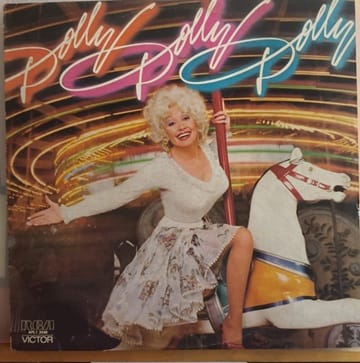
Through the years, I continued to follow her music career: “Here You Come Again,” “Heartbreaker,” “Dolly, Dolly, Dolly,” “Rainbow” and a whole string of other albums.
Jolene is regarded as one of the landmark albums in country music. It produced two of her biggest hits—“Jolene” and “I Will Always Love You.”
Dolly wrote both songs in 1973, and it is a joy to listen to them. Her vocal prowess was simply tops. The album showcased Dolly not just as a singer, but as a gifted songwriter and storyteller, firmly establishing her place in country music.
She went on to broaden her appeal into the mainstream pop world, particularly with the release of Heartbreaker in 1978. But watching Dolly perform live was something else. It was an experience—to see her emotions, her humour and her extraordinary stage presence up close.
My wife, Ginny, and I were fortunate enough to experience that enlightening aura when her Blue Smoke World Tour stopped at the Sydney Entertainment Centre in 2014. We have our son Ansel and daughter-in-law Jennifer to thank for making it possible.
Dolly had an uncanny, easy way of connecting with an audience. She communicated with us as though she knew us.
Between songs, she shared stories that put smiles on our faces. And sometimes, a quiet, heart-pulling song brought a cloud to our eyes. Her singing was powerful and clear, almost like Sydney’s Blue Mountains air.
We were also surprised by her extraordinary musical skills. She played the banjo, guitar, fiddle, autoharp, piano and even a tiny saxophone. Then came a haunting moment. She sang “Little Sparrow” a cappella, with no musical backing.
Just Dolly’s pure, raw Appalachian voice. The audience was frozen into silence.
Despite her global stardom, Dolly remained sweet, down-to-earth and incredibly witty, often joking and connecting with people in the audience.
It was a solid three-hour marathon featuring 29 songs. The setlist was packed with a mix of originals, multi-song medleys and surprise cover versions, including Bon Jovi’s “Lay Your Hands on Me” and Bob Dylan’s “Don’t Think Twice, It’s All Right.”
While Ginny and I enjoyed watching this pint-sized dynamo perform, my younger brother Edwin Sylvester had a very different kind of Dolly experience. As a student at Southern Illinois University in the US, he came face to face with Dolly in 1984 during her concert at the University Auditorium.
“I was one of the backstage staff, and my job was to hand over microphones for the different numbers she sang,” he recalled.
And he added: “Couldn’t speak to her, even backstage, as we were not allowed to.”
Edwin still remembers her rendition of “Coat of Many Colours” as he handed her a microphone. The song tells the story of a coat Dolly’s mother sewed for her from colourful fabric scraps. Dolly wore it with pride, even as her schoolmates laughed at her.
It became one of Dolly’s most personal and beloved songs. She wrote it in 1969, scribbling the lyrics on the back of a dry-cleaning receipt.
Just like Dolly, my siblings and I still remember our Mum through this song. Growing up, our Mum would stitch our pyjamas, pillow covers, bedsheets and even curtains. It reminds us that a mother’s deep love and sacrifice are a wealth and devotion that cannot be bought with money.
Dolly, yesterday is nothing but mem’ries of the songs you gave us.
WE