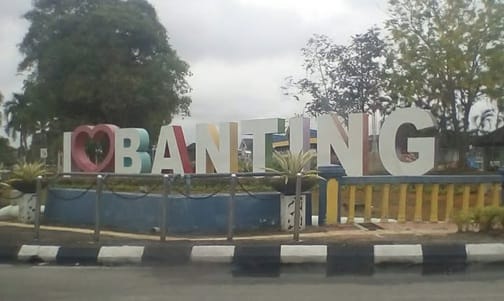
Image Credit: Banting Kini FB
By Dr Sajad Hussein Kamarally
I was just 11 years old on Merdeka Day, August 31, 1957.
My household, my neighbours, and the whole of quaint little Banting were caught up in the excitement. To make it even more special, Banting had received its electricity supply only a few days before Merdeka.
At night, our sleepy little town suddenly seemed to turn into a fairyland, decorated with beautiful coloured lights.
On the morning of Merdeka, crowds were already gathering at the town hall. Three huge loudspeakers had been installed so that people could follow the declaration ceremony taking place at Merdeka Stadium in Kuala Lumpur — through the radio. Television? We had never even heard of it then!
When the booming voice of Tunku Abdul Rahman came through the loudspeakers:“Merdeka! Merdeka! Merdeka!” the crowd erupted in celebration. Seven times!
Our family shophouse was beautifully decorated, too. On its front facade was a large “M”, with colours inspired by the Malayan flag of the time — yellow, blue and red.
To my 11-year-old mind, it was simply a wonderful celebration. And the best part? We had a school holiday! I did not understand the enormous significance of the moment. To a boy of 11, Merdeka was simply another celebration — like Hari Raya, Chinese New Year or Deepavali.
It was only about eight years later, when I began learning more about our country’s history, that I truly understood the importance of what I had witnessed as a child.
As I learned more about independence, I realised how fortunate Malaya was to achieve independence from Britain through negotiations and in relative peace. Elsewhere, including India, the journey to independence was accompanied by considerable violence and bloodshed.
At the time of Malaya’s independence, our own country was still facing the armed threat of the communists. In Banting, we were subjected to night-time curfews. Our elders took turns to guard the town entrance and exit.
Our homes were also regularly checked. The authorities were concerned that if people hoarded food, supplies might find their way to communist fighters hiding in the nearby jungle.
It was during this period that I also saw the establishment of a new village in Jenjarom, about 12 kilometres from Banting. Its purpose was to resettle people in a more organised manner and help contain the spread of communism. That village still exists today.
When I look back at the country’s journey since that Merdeka morning, I realise just how far we have travelled. From a small town that had only just received electricity, we grew into a modern, developing and considerably more prosperous nation. We have much to be grateful for.
I also remember something rather sad. From time to time, I heard some people attempting to downplay Tunku Abdul Rahman’s role in the struggle for independence.
Years later, when I had the opportunity to meet Tunku personally in Penang, I once asked him: “Tunku, do you bear a grudge against those who plotted against you?”
He smiled. Being the true gentleman that he was, he showed no anger. Instead, he said something to this effect: “Let them do what they want. The truth will eventually triumph.” He was right. Time eventually decides who history remembers.
Today, whenever I return to Banting, I can hardly recognise the little town that was my entire world when I was 11. The shophouse where I grew up is still there, but the owners have changed. The neighbouring kopitiam I used to frequent is still there too, but it has fallen into some disrepair. The original owners have passed on, and the next generation seems either unable or unwilling to restore it to its former life.
In another corner of Banting, a new township has sprung up. When I was a child, that area was simply a place where we hunted for spiders and watched birds. Today, it is filled with buildings and a new generation of life. That is change. Countries change. Towns change. Houses change. Generations change. But memories never really disappear.
And whenever I think back to that morning of August 31, 1957, I remember an 11-year-old boy standing among the crowds in Banting, listening to Tunku’s voice booming through the radio. He did not understand history. He only knew that the day was special. Now, almost seven decades later, I finally understand why. Merdeka was never just a date. It was a journey.
A journey from fear to confidence, from hardship to progress, and from a country still searching for its direction to the Malaysia we know today. We may disagree about many things. But one thing cannot be changed:
We have all inherited a country built by the generations before us. Our responsibility is not merely to enjoy what they built. It is also to protect it. That is the meaning of Merdeka. I only came to understand it long after I had left the age of 11 behind.
WE