By Dr Rahim Said
The first time I heard from Sohail Nakhooda, it wasn’t Sohail at all — it was a message relayed through the Editor-in-Chief of the Weekly Echo, the kind of introduction that arrives almost sideways and only later reveals itself as consequential.
He was putting a magazine back together, the EIC said, and he wanted me to write for it. I knew the name Islamica the way you know a piece of music you haven’t heard in years — familiar, faintly nostalgic, and, I assumed, finished.
I was wrong about the finished part.
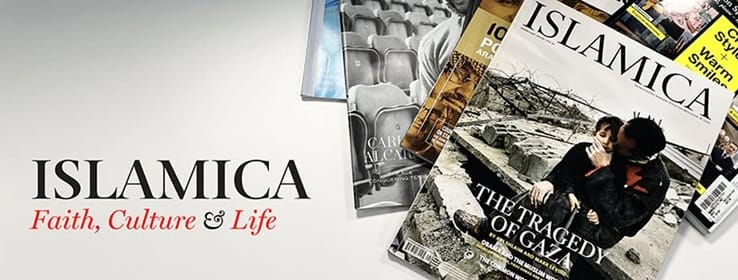
Islamica had been launched years earlier at the London School of Economics, carried afterwards to Amman, to Cambridge, to London, asking questions few trade magazines bother with — about civilisation, about the intellectual confidence of the Muslim world, about whether ideas forged in Kuala Lumpur or Dakar could hold their own in a conversation still largely narrated from elsewhere.
For a while, it did what serious magazines rarely manage: it built readers who treated it less as a subscription and more as a standing invitation to think. And then, as happens even to the most convicted of enterprises, the money ran out. Islamica went quiet — not dead, but suspended, a sentence left hanging for a very long time before someone decided to finish it.
That someone, it turned out, was going to be reaching out to me a couple of weeks before he finished it. When the invitation came through the Weekly Echo EIC, I said yes without quite grasping what I’d agreed to be part of. It was only later, in Kuala Lumpur, that the scale of it became clear.
Monday,July 27, was not a quiet day to relaunch a magazine. The Sultan of Perak was in town that same day to open a waqf forum, and Islamica’s return rode in on that current of civic and religious attention rather than against it. In the room where the new issue was unveiled, stacks of it sat fresh and glossy on a black-clothed table, the cover given over entirely to the late Syed Muhammad Naquib al-Attas — civilisational philosopher, founder of ISTAC — a choice that felt less like coincidence than a homecoming. A magazine built to ask what Muslim civilisation owes its own thinkers, choosing to return by honouring one of the very best of them.
Sohail was there, quieter than the moment perhaps deserved, hovering near the table the way founders do at relaunches — half-proud, half-anxious, the way you are when something you thought was finished turns out not to be. This was only the second time I had properly met him in person, weeks after that first sideways introduction, and something in the gap between the two meetings said more than any speech could have.
A magazine does not simply relaunch itself. Someone has to want it back badly enough to survive the years in between — the fundraising conversations that go nowhere, the advisory boards that scatter, the private moments of wondering whether the idea was ever as good as it felt. Sohail carried that weight and kept walking anyway, and somewhere along the way, thought to bring a stranger from Weekly Echo along for the second act.
He handed me a copy himself. Not mailed, not left at a booth — handed, the way you pass something you’ve built with your own hands to someone you trust to understand its weight. I didn’t say much. There wasn’t much that needed saying. I simply gave him a thumbs up, a small gesture for a large thing, but sometimes the small gesture is the only honest one available.
I’ll admit the thumbs up came with a private asterisk. I have sat through enough relaunches — of magazines, of parties, of promises — to know that the room full of glossy copies and good intentions is the easy part.
Islamica has already proven once that conviction is not the same thing as cash flow, that an editorial board can be world-class and a bank balance can still say otherwise. Waqf forums and royal patronage make for a fine launch photo, but they are not, on their own, a subscription model.
I have watched too many well-meant Malaysian ventures — cultural, civic, journalistic — arrive with a sultan’s blessing and a full table of well-wishers, only to quietly run out of runway once the cameras leave the room.
So, I will say this plainly, the way I’d write it in a column rather than a toast: I hope Islamica outlasts its own launch party this time. I hope the second act has learned something the first one didn’t — about sustainability, about not mistaking enthusiasm for endowment. But hope, in my experience, is not a business plan, and I have seen this particular film before.
Magazines fold every year, and most stay folded. Islamica didn’t — not permanently, anyway. That, more than anything on its glossy cover, is the story worth telling — of an editor who refused to let a dream stay quiet, and who is still betting, all these years later, that ideas deserve a second act. Whether the bank statements agree with him a second time is, as ever, the part nobody puts on the cover.
WE