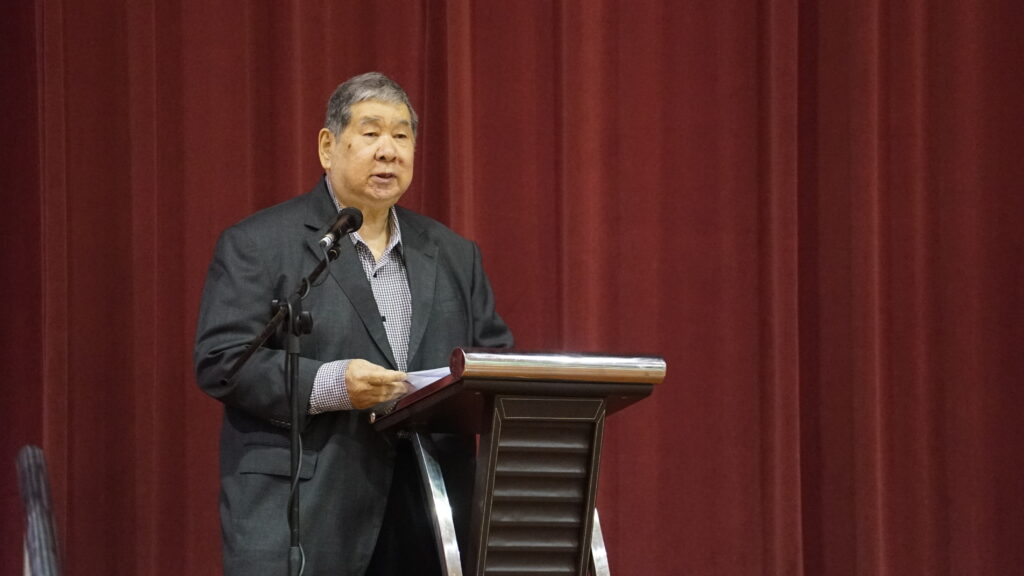
PETALING JAYA, May 20 (Bernama) — Growing concerns over foreign-driven misinformation and the spread of falsehoods through digital platforms are threatening public trust in Malaysia’s media environment, said Malaysian Press Institute (MPI) president Datuk Yong Soo Heong.
Citing findings from the 2026 Edelman Trust Barometer Malaysia launched today, Yong said 73 per cent of Malaysians are worried that foreign interests are deliberately polluting the country’s media landscape with false information.
He attributed this trend partly to rapid smartphone usage and the “fear of missing out” (FOMO) phenomenon, which he said exposes the public to unverified reports and hidden agendas online.
“When people have sophisticated smartphones, they also develop this FOMO syndrome and consume all kinds of bizarre reports from dubious sources and individuals with questionable agendas. When this happens, people become exposed to all sorts of misinformation,” he said in his keynote address at the launch event here today.
Also present was Radio Televisyen Malaysia (RTM) director-general Ashwad Ismail, who served as a panellist in a discussion titled “From Trust Holders to Trust Brokers: What Malaysia’s Institutions Must Do”.
Yong also urged the public to rely on credible mainstream media sources amid the growing spread of misinformation, while stressing that Malaysia’s media industry must continue strengthening public confidence through higher journalism standards and responsible reporting.
Despite the concerns, he noted that Malaysia remained among the world’s most trusted nations, ranking eighth globally in the 2026 Edelman Trust Barometer with a trust index score of 71.
He said trust in businesses was particularly strong at 76 per cent, placing Malaysia ahead of several developed economies, including the United States, the United Kingdom and Australia.
“But beneath the positive findings lies a warning. This issue of insularity is increasing, with 65 per cent of Malaysians hesitant to trust those with different values and beliefs. Trust is not only about confidence in institutions, but also about trusting one another,” he added.
The 2026 Edelman Trust Barometer is the firm’s 26th annual trust and credibility survey, conducted between Oct 23 and Nov 18, 2025, involving 33,938 respondents across 28 markets, including more than 1,200 respondents from each country.
Meanwhile, Edelman said in a statement that Malaysia’s overall Trust Index rose to 71 this year from 66 in 2025, placing the country seventh globally among the 28 markets surveyed.
However, the statement highlighted growing concerns over distrust among people with differing views and backgrounds.
It said 87 per cent of Malaysians believe people distrust those with differences so deeply that they actively try to make life worse for one another, the highest figure recorded among all surveyed markets.
The study also found that 65 per cent of Malaysians hold an insular trust mindset, meaning they are hesitant or unwilling to trust individuals with different values, views on societal issues, information sources or cultural backgrounds.
Edelman Malaysia chief executive officer and Edelman Southeast Asia senior advisor Mazuin Zin said Malaysia’s strong institutional trust scores reflected a significant achievement, particularly in strengthening investment confidence and institutional credibility.
“Malaysia has earned its place among the world’s most trusted nations. That is a genuine achievement and important for investment confidence, institutional credibility and the country’s standing in a world where trust has become increasingly scarce.
“However, the data also points to a deeper challenge. The trust Malaysians have built largely exists within familiar circles, among people who share similar values, information sources and communities,” she said in a statement.
The report also highlighted growing economic concerns, with only 39 per cent of Malaysians believing the next generation would enjoy a better future, down seven percentage points from 2025.
At the same time, fears over recession and trade-related job losses among employees reached record highs globally.
— BERNAMA