An analysis by Leslie Lim
As the week draws to a close, Budget 2027 offers the rakyat a genuine reason for optimism — a welcome financial lift even as a troubling haze hangs heavy over much of the country.
Beyond the usual breakdown of policy highlights and individual goodies, Prime Minister Datuk Seri Anwar Ibrahim’s message is clear: this budget seeks to ease the burden of rising living costs through a broad package of financial relief, income support, and targeted reforms.
What stands out is its reach across different segments of society. The middle‑income M40 group, frequently caught in the squeeze of urban inflation, gains some breathing room alongside lower‑income households, senior citizens, gig workers, taxi drivers, and students.
Even expatriate families benefit from updated employment pass arrangements that allow accompanying spouses to work, subject to requirements.
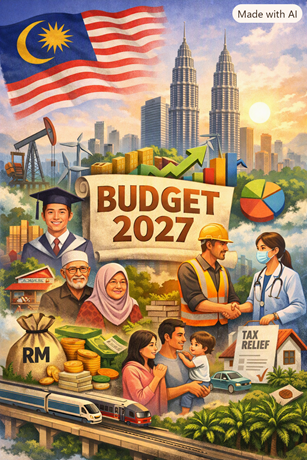
Students receive a boost through the new Form Six allowance, while graduates and semi‑skilled workers gain from a proposed RM2,500 starting‑wage framework. Young families also benefit from expanded tax reliefs and stamp duty exemptions for first homes. Together with measures covering childcare, elderly care, sports, and digital skills, the budget touches many aspects of everyday life.
Framing a pocket‑friendly package under current global conditions is no easy feat. With external spillovers from the West Asia conflict pushing national fuel and energy subsidies to RM40 billion, delivering relief while managing the fiscal deficit required a delicate balancing act.
Against this backdrop, the strategy is understandable: address cost‑of‑living pressures where people actually live and spend, rather than relying solely on temporary handouts.
The increase in individual tax relief from RM9,000 to RM12,000 is another welcome adjustment after years without revision.
Naturally, a budget delivering visible benefits across so many demographic groups carries the familiar polish of a policy plan tuned to broader national dynamics. While observers will inevitably read into the careful policy timing ahead of GE16, for ordinary Malaysians facing rising household expenses, the more immediate question is whether these measures translate into meaningful relief.
Still, the benefits will not be felt equally. Eligibility rules matter, and tax relief naturally offers greater value to those with sufficient taxable income — meaning the real question is how far these measures reach the households that need financial breathing room most.
Higher starting wages and the revised minimum wage of RM2,000 are welcome steps for workers, though smaller businesses will need room to adapt. Crucially, with the minimum wage adjustment taking effect from June next year, enterprises are given adequate time to review their business models and restructure payrolls responsibly.
Even so, the government must ensure that higher labour costs do not translate disproportionately into higher prices for everyday goods and services. Wage increases do not automatically cause inflation, but the risk deserves attention if productivity fails to keep pace.
Ultimately, a budget should be judged not by the number of announcements or the breadth of its promises, but by what people actually gain once the measures take effect.
For now, Budget 2027 offers a welcome measure of reassurance. Even under hazy skies, Malaysians have reasons to feel cautiously optimistic. The real test is whether this financial breathing room lasts beyond the initial feel‑good moment and becomes a more durable improvement in everyday life.
WE