by Dr Rahim Said
There are songs you remember — and then there are songs that remember you.
When my old classmate Lee — now a historian living in Johor Bahru — sent me an old clip of First of May by the Bee Gees, it did not arrive merely as music. It came like an unopened drawer from another life.
Suddenly, it was 1967 again, and we were boys finishing Form 6 at Sultan Abdul Hamid College in Alor Setar — young enough to think time was endless, old enough to pretend we understood the world.
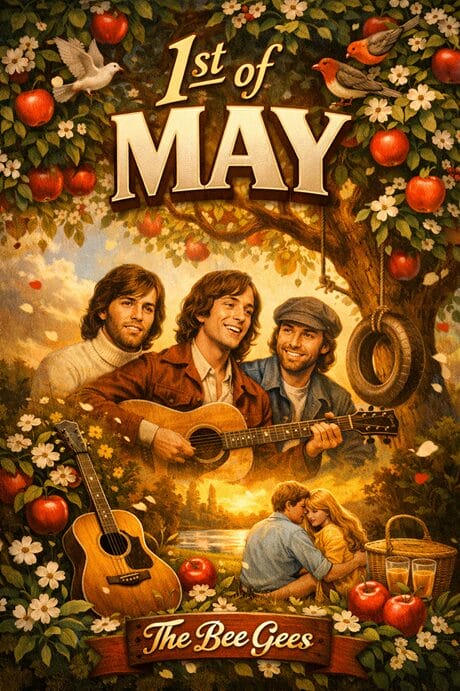
The Bee Gees sang, “When I was small, and Christmas trees were tall…”
Which, if you grew up in Alor Setar in the 1960s, was already an exercise in imagination. (By the way, the song was released in 1969)
At Sultan Abdul Hamid College, we hardly saw Christmas trees. Certainly not towering ones. Apple trees were even more mythical. Kedah gave us rain trees, angsana trees, rubber trees, coconut palms and the occasional rambutan tree if you wandered far enough outside the campus. Apples came wrapped in paper at Chinese New Year hampers, not falling poetically from orchard branches as Barry Gibb would have us believe.
Yet somehow, the song still belonged to us. Because nostalgia is never about botanical accuracy.
Back then, our world was bounded by school walls, bicycles, government quarters, coffee shops and the faint smell of chalk dust. The school field looked endless, the corridors echoed with voices that had long since disappeared, and teachers seemed to belong to a species older than history itself.
We wore white shirts that were never truly white by the end of the day, and our ambitions changed weekly depending on exam results and whichever girl smiled in our direction.
Lee, even then, had the temperament of a man who would eventually declare himself an historian. He remembered dates, names, odd incidents, forgotten teachers and classroom politics with a seriousness the rest of us reserved for football and girls. Today, he documents the past with the confidence of a man who has appointed himself curator of memory. But on that day, when he sent me First of May, he became less historian and more messenger.
Because one song can collapse six decades. “Now we are tall, and Christmas trees are small…”
That line hurts differently when you have lived long enough to understand it. The trees haven’t changed, of course. It is our relationship with time that has. In 1967, we wanted life to begin. We wanted school to end, exams to finish, adulthood to arrive with all its imagined freedoms. Nobody told us those school days were about freedom.
At Sultan Abdul Hamid College, our romances were not conducted under apple trees but in stolen glances between classes, nervous walks past the canteen, and whispered conversations after school while pretending to wait for transport. Our first declarations of affection were awkward, coded and often interrupted by prefects or teachers with an exaggerated sense of discipline. Still, those moments acquired permanence.
The Bee Gees understood something we didn’t: that growing up is less a triumph than a gradual surrender. One day you are laughing in a classroom, the next you are receiving old video clips from classmates who have grown grey, spread across the map, and turned into grandfathers, retirees, businessmen, civil servants — or, in Lee’s case, historians by choice.
The song speaks of lost love, but what it really captures is something broader: the quiet theft committed by time. The classrooms now belong to others. The town has changed. Familiar roads carry unfamiliar names. The faces we knew have thinned into memory. And yet the emotional geography remains intact.
The irony, of course, is that in our youth, we were impatient for tomorrow. Now we mine yesterday for meaning.
That clip from Johor was probably sent casually. Perhaps Lee simply thought of our old school days. But it landed like a small historical event. For three minutes, the years folded back. The corridors of Sultan Abdul Hamid College reopened. The school bell rang again. The heat of Alor Setar afternoons returned.
There were no Christmas trees. No apple trees. No poetic orchards.
Only schoolboys in Kedah, standing on the threshold of adulthood, not knowing they were already inhabiting the best chapter of their lives. And perhaps that is why First of May still lingers.
Whether you grew up in London, Melbourne, New York or Alor Setar, whether your trees bore apples or rambutan, the truth remains unchanged: time passes, people leave, places become memory.
But somewhere, in the melody of an old Bee Gees song sent by an old classmate, we are still there — young, uncertain, laughing too loudly in school corridors, believing life is just about to begin.
WE