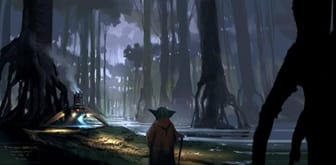
Image Credit: Yoda FB
By Dr Rahim Said, who muses about Father’s Day
At precisely three o’clock in the morning, my phone lit up. Only two kinds of messages arrive at 3 a.m. One is bad news. The other is from children who live in different time zones and have absolutely no idea what time it is where their parents live.
It was our son. The message read: “Dad. Do Not Try to Have a Happy Father’s Day.”
At three in the morning, with one eye open and the other still negotiating with sleep, this did not sound encouraging. My immediate thought was: What have I done now?
Had I forgotten somebody’s birthday? Had I accidentally posted something politically incorrect? Had the family group discovered my secret stash of chocolate biscuits?
The message continued: “Do or do not. There is no try. On Father’s Day and always: YODA BEST DAD EVER!”
Now, in the full light of day, this is apparently a very sweet card.
At three in the morning, however, when your reading glasses are somewhere in the kitchen, and your brain resembles overcooked porridge, you squint at the screen and ask yourself one important question: Who on earth is Yoda?
Or perhaps more importantly, why am I suddenly being compared to him? I vaguely remembered a small green fellow with oversized ears from Star Wars. He spoke English backwards, looked permanently surprised, and appeared to be several hundred years old.
The more I thought about it, the less flattering the comparison became. Short. Wrinkled. Walks slowly. Speaks in confusing sentences. Needs a walking stick. Suddenly, I realised my children may know me better than I know myself.
Fathers eventually become Yoda.
When we are young, we think we are Luke Skywalker — heroic, adventurous, destined to save the galaxy. By middle age, we become Obi-Wan Kenobi — slightly wiser, occasionally consulted, but increasingly ignored. And eventually we become Yoda.
Small household philosophers dispensing unwanted wisdom. “Switch off the lights.” “Money does not grow on trees.” “Finish your food.” “Sleep early.” “Petrol is not free.” “You call this music?”
We speak in mysterious sayings that our children roll their eyes at but secretly remember years later. We become creatures of habit. We wake before dawn even without alarms. We complain about electricity bills. We inspect leaking taps. We become fascinated by weather reports. A trip to the hardware store becomes an exciting weekend outing.
Meanwhile, our children migrate across continents, live in different time zones and communicate with us largely through emojis. The modern father spends his life waiting. Waiting outside tuition centres. Waiting outside schools. Waiting at airports. Waiting for children to reply to messages. And eventually waiting for them to call.
When they finally do call, the conversation often lasts three minutes.
“Hi, Dad.”
“Have you eaten?”
“Yes.”
“Everything okay?”
“Yes.”
“Need money?”
“No.”
“Okay.”
“Okay.”
Then the line goes dead, and fathers stare at their phones like archaeologists studying ancient artefacts. Yet every now and then, at three in the morning, a message arrives. A silly message. A joke. A Star Wars quote.
And suddenly you realise that the little boy who once needed help tying his shoelaces now lives halfway across the world but still remembers Father’s Day. That is perhaps what fatherhood really is.
Nobody tells young fathers that their greatest achievement may simply be remaining available. Not being perfect. Not being rich. Not always having the right answers. Just remaining there.
Like Yoda sitting in some distant swamp, ready to offer advice nobody asked for. Children grow older. They leave home. They build their own lives. But somewhere inside them remains a small voice saying:
“Dad might know.”
This is dangerous because fathers usually do not know. We simply pretend. When our children were young, we confidently answered impossible questions.
Why is the sky blue? Why do cats purr? Why do planes fly? Where do babies come from?
Fathers answer everything with the confidence of Nobel Prize winners and the accuracy of broken calculators. Years later, our children discover Google and realise Dad’s scientific knowledge was largely invented. But by then, it no longer matters.
Because fathers are not encyclopaedias. They are landmarks. A familiar voice. A safe number to call. An old joke. A patient listener. A man who still worries whether his grown children have eaten.
So, perhaps being compared to Yoda is not an insult after all. Yoda was old. He was peculiar. He spoke strangely. He carried no wealth. He occupied no palace.
Yet when the heroes were lost, they sought him. Maybe that is what fathers become. Not superheroes. Not celebrities. Simply old guides with questionable fashion sense and deteriorating eyesight. And yes, sometimes very large ears.
This Father’s Day, I looked again at the message. “Yoda Best Dad Ever.” At three in the morning, it made very little sense.
By breakfast, it made me smile. By evening, it made me realise that the greatest Father’s Day gifts are rarely expensive. A phone call. A message. A memory. A joke shared across continents and time zones.
And perhaps the comforting knowledge that somewhere, in another country, your child still thinks of you when Father’s Day arrives. Although next year, I would greatly appreciate it if the greeting could arrive at a more reasonable hour.
Because at three in the morning, Yoda, I may be. Jedi Master, I most certainly am not.
–WE