By Leslie Lim
The Prime Minister’s recent decision to bring the plight of petty traders to the Cabinet highlighted a harsh reality: for small operators, “good times” are tough and “bad times” are a breaking point.
Their fundamental weakness isn’t just overheads – it’s volume. They simply cannot match the purchasing power or sales turnover of big chains and established outlets.
Look at the landscape in busy townships across Kuala Lumpur and Petaling Jaya. Malls and trendy shop lot cafes are mushrooming at every corner.
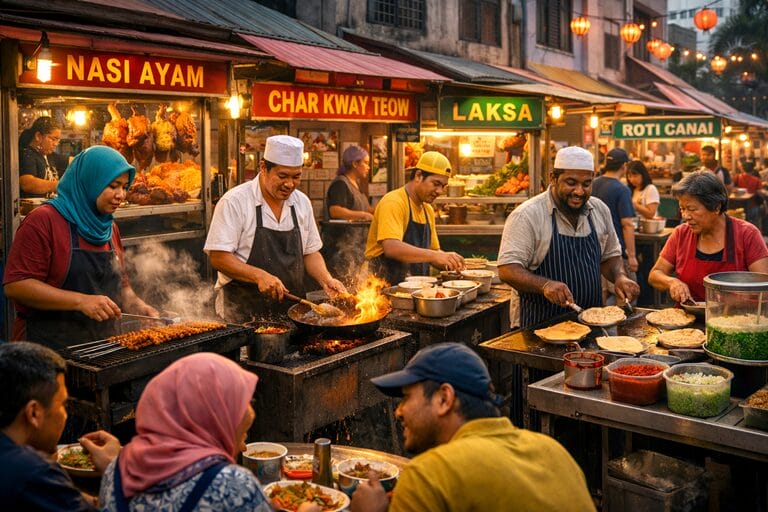
Yet, our traditional kedai kopitiam are fading, and many DBKL and MBPJ-managed “medan selera” are plagued by empty lots. We see the same trend at traditional wet markets and pasar malam – the footfalls are dwindling.
Consumers are gravitating towards hypermarkets because, through sheer scale, these giants can often undercut the traditional wet market and pasar malam on price – sometimes even lower than FAMA’s wholesale prices.
However, savvy consumers with changing lifestyles also play a role. While paying RM18 at the world’s number one coffee chain is a luxury and a stretch for many, paying RM7 or RM8 is increasingly seen as value for money at the fast-emerging coffee chains.
Many have no qualms paying this premium over the traditional kedai kopi selling for under RM3.50.
The same irony applies to our favourite nasi lemak. You will see long queues at popular nasi lemak restaurants charging RM15 to RM18 for nasi lemak with ayam goreng berempah, while a struggling stall operator nearby finds it difficult to move a similar offering for RM10 to RM12.
Even at some of our popular Ramadan bazaars recently, many have questioned the participation of major chains. With their attractive promotions and massive scale, they compete head-on with small traders in a space traditionally reserved for micro-entrepreneurs.
When a chain can offer popular drinks at similar prices to their outlets, the small vendor selling a traditional brew at similar prices is left looking “expensive” in comparison.
The food stalls and small restaurant owners are being squeezed from both ends: they pay more for their supplies than the big players, and they are losing the middle-ground consumer to “lifestyle” branding and “value-scale” chains.
If Putrajaya wants to ease the burden, it must look beyond just the price of food items and ingredients. They need to address why the traditional Malaysian “street” economy is losing out to the big boys. It isn’t just about rising costs; it’s about a structural shift that’s leaving the small trader behind.
WE