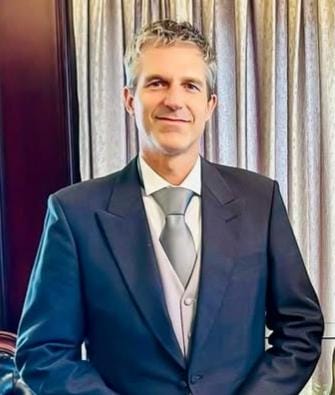
KUALA TERENGGANU, July 6 (Bernama) — The European Union (EU) is keen to expand cooperation with Terengganu in strategic sectors, including the green economy, digitalisation, Artificial Intelligence (AI), and Technical and Vocational Education and Training (TVET), following discussions with the state leadership today.
EU Ambassador to Malaysia Rafael Daerr said the three-day visit by EU ambassadors and representatives to the state, beginning Sunday, aimed to better understand Terengganu’s development agenda and identify new areas of collaboration.
“We came to Terengganu to better understand the state, where it is today, where it wants to go and where there are opportunities for us to strengthen our cooperation.
“Terengganu has shown us that we can work together more closely,” he told reporters after a meeting with Terengganu Menteri Besar Datuk Seri Dr Ahmad Samsuri Mokhtar and members of the state executive council (EXCO) at Wisma Darul Iman here.
The delegation earlier had an audience with the Regent of Terengganu, Tengku Muhammad Ismail Sultan Mizan Zainal Abidin, at Istana Syarqiyyah.
Daerr described Malaysia as one of the EU’s key trading partners, with existing cooperation spanning sectors such as semiconductors, electronics and industrial equipment, and highlighted critical raw materials as another area with strong potential for collaboration.
He said Terengganu offered significant opportunities for European investment, noting that several European companies are already operating in the state and that more than 2,000 European companies have operations across Malaysia.
Besides the state’s established petrochemical industry, Daerr said the EU saw strong potential for cooperation in the green economy and digitalisation, adding that European companies bring not only investment but also technology and expertise, particularly in green technology, energy efficiency, water management and sustainable resource management.
“When European companies invest in Malaysia, they become part of the socio-economic fabric of the state. Success means creating partnerships where both sides benefit,” he said, citing German semiconductor manufacturer Infineon, which employs about 14,000 people in Malaysia, of whom 99 per cent are locals.
Meanwhile, Daerr said cooperation with Terengganu in AI, TVET, higher education and research formed part of efforts to strengthen long-term economic and people-to-people ties.
He said Europe has a diverse AI ecosystem comprising many innovative companies specialising in various fields, with several already operating in Malaysia.
He added that the EU advocates a human-centred approach to AI, including protecting personal rights, safeguarding personal data and ensuring the technology is used responsibly.
On TVET, Daerr said several European countries have established strong vocational education systems that combine practical workplace experience with formal education, providing a model for closer cooperation with Terengganu.
He said continuous investment in education and skills development is essential as AI continues to evolve rapidly, adding that lifelong learning would better prepare young people for future employment.
Daerr also highlighted education and people-to-people exchanges as key pillars of EU-Malaysia relations, citing programmes such as Erasmus+ and Erasmus Mundus, which promote student mobility, academic collaboration and joint research.
He said there are currently at least two research projects involving higher education institutions in Terengganu, namely Universiti Malaysia Terengganu (UMT), in collaboration with partner universities in Europe, particularly in the fields of aquaculture and biodiversity.
— BERNAMA