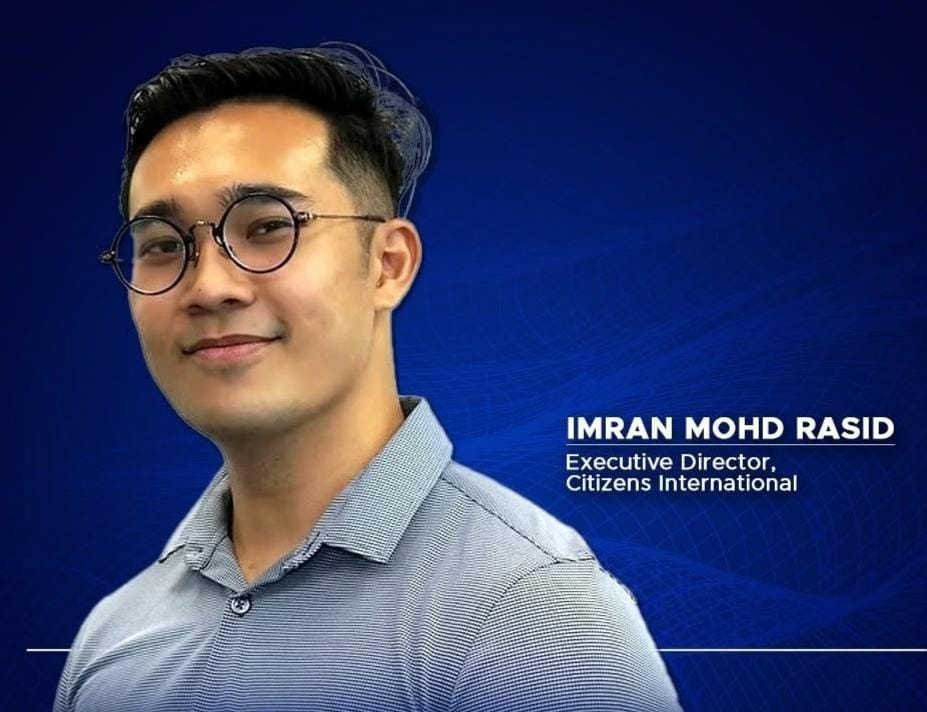
KUALA LUMPUR, June 15 (Bernama) — Malaysia’s long-standing foreign policy of active non-alignment is well aligned with the broader aspirations of the Global South, enabling the country to engage constructively with all major powers while safeguarding its own national interests, said Imran Mohd Rasid, Executive Director of Citizens International, an international non-governmental organisation (NGO).
Speaking on The Nation programme aired by Bernama TV on Monday, Imran said active non-alignment reflects the core values underpinning the Global South movement, which seeks a more balanced, just and multipolar international order without forcing countries into rigid geopolitical camps.
He said the Global South, which comprises developing nations in Africa, Asia, Latin America, the Caribbean and parts of Oceania, should not be viewed as a formal organisation with fixed membership but rather as a shared vision rooted in the historical experiences of colonialism, unequal development and the pursuit of greater autonomy in international affairs.
“The sort of doctrine that we are trying to advocate now is active non-alignment. It is the kind of philosophy that can be traced back to the Global South movements as well,” he said.
According to Imran, active non-alignment allows Malaysia to maintain productive relations with countries and blocs across the geopolitical spectrum, including the United States, China, the European Union, ASEAN and BRICS, while making decisions based on national interests.
“And that means we are able to engage with other countries regardless of which power they are and do it in a way that benefits our national interest,” he said.
He stressed, however, that non-alignment should not be mistaken for passivity or neutrality, noting that Malaysia has consistently taken principled positions on major international issues, including the conflict in Gaza, based on multilateralism and international law.
“We are critical of what is happening in Gaza. We are also critical of what is happening in Iran, Venezuela and Cuba. That does not come from solidarity in the sense that we are friends, but it is basically based on multilateralism and international law that we recognise as well,” he said.
Imran said Malaysia’s decision to become a BRICS partner country complements this approach, as the grouping serves primarily as an economic platform that broadens opportunities for South-South cooperation rather than functioning as a military or ideological alliance.
He said BRICS offers developing countries additional channels for trade, investment and financing, creating alternatives that can reduce excessive dependence on traditional Western-led institutions while preserving strategic autonomy.
“People exaggerate the powers of BRICS. It is basically an economic organisation trying to promote South-South trading activities and provide an alternative platform for engaging in economic activities within the Global South,” he said.
Imran also pointed to the emergence of a more confident Global South, with countries increasingly willing to articulate independent positions on global issues and challenge long-standing imbalances in the international system.
He traced the intellectual roots of the movement to the 1955 Bandung Conference, where newly independent Asian and African nations advanced principles of peaceful coexistence, anti-colonialism and sovereign equality, despite having differing political systems and bilateral disputes.
As global power dynamics continue to evolve, he said, active non-alignment provides smaller and middle powers such as Malaysia with the flexibility to navigate intensifying competition among major powers without being forced to choose sides.
“Every country nowadays is realising that the world is changing and that a multipolar world is rising. It gives opportunity for a new alignment, a new economic bloc and a new narrative. This is why the conversation about the Global South is becoming more critical,” he said.
— BERNAMA