PETALING JAYA, July 2: Former Finance Minister Lim Guan Eng and former Damansara MP Tony Pua today made several clarifications regarding the LRT3, now known as LRT Shah Alam Line, following remarks by the Sultan of Selangor, Sultan Sharafuddin Idris Shah.
The following is their joint statement in its entirety.
We respectfully appreciate and thank Tuanku for your observations on the completion of the LRT3 project, now named the LRT Shah Alam Line. We wish to respectfully and humbly clarify several matters which can be verified with Prasarana and MRCB Bhd.
One, the LRT3 project was never stopped, stalled or suspended during the Pakatan Harapan administration between 2018 and 2020. We would like to also affirm that the then PH administration had fully supported the LRT3 project and deemed it a critical and essential project to improve the daily lives of Klang Valley residents.
Two, the BN Najib administration approved RM9 billion for the LRT3 project and provided Prasarana with a RM10 billion government guarantee to raise funds in 2015. However, Prasarana awarded various Work Package Contracts (WPC) amounting to RM15.2 billion in March 2018, well exceeding the budgeted RM9 billion approved sum.
After accounting for all other costs, including but not limited to land acquisition, PDP and consultancy fees, and interest to be incurred during the construction period, Prasarana had submitted in March 2018 for a new project budget of RM31.65 billion and an additional Government Guarantee request of RM22 billion to raise funds for the project.
Three, after the change of Government in May 2018, the project work continued unabated while the new administration worked very closely and amicably with the appointed Project Delivery Partner (PDP), MRCB-George Kent to rationalize the cost of the project.
Four, as the LRT3 project was only 9% completed at that point of time, we took the opportunity to engage independent engineering consultants to review and propose rationalisation measures to ensure proper accountability for the project. The move was critical because there were many ‘hidden’ off-balance sheet debts incurred during the Najib administration. This is on top of the tens of billions of debt incurred by the RM50 billion 1MDB scandal.
It should be highlighted that the mandate for the review demands that the size and scale of project must meet passenger demand as per the traffic studies and must be approved by Suruhanjaya Pengangkutan Awam Darat (SPAD).
Five, the Cabinet approved the cost revision downwards by 47% from RM31.65 billion to RM16.63 billion, a savings of RM15.02 billion.
Six, we have prioritised functionality and practicality over luxury and grandeur. There was no necessity to build MRT-sized stations for a LRT project. The measures taken included:
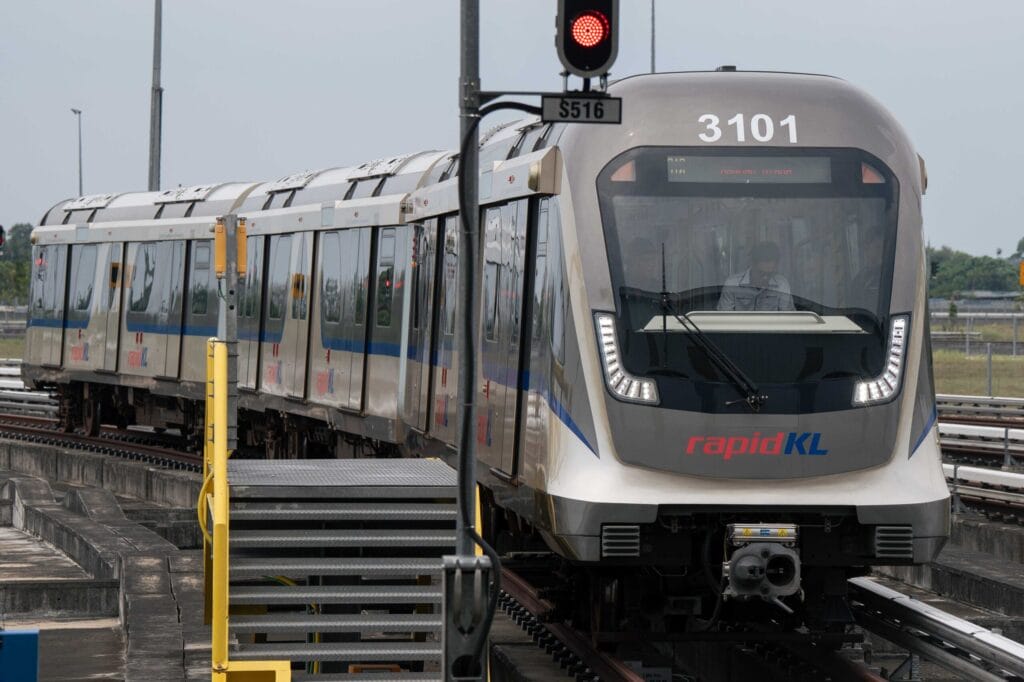
Train Fleet Reduction – with the rolling stock order cut from 42 sets of 6-car trains down to 22 sets of 3-car trains in accordance with passenger traffic study up to 2035, conducted by independent consultants and approved by SPAD.
Deferring 5 LRT Stations with low projected initial passenger ridership (not cancelled) until future demand justified their construction, with provisions made for the 5 LRT stations to be built in the future.
These 5 stations have since been reinstated in-line with current developments. The Government has recently awarded the Phase 2 contract worth RM 5.3 billion for the above stations, additional rolling stock and other upgrades. The new phase increased the project cost from RM 16.63 billion to RM 21.93 billion, which is still RM 9.72 billion less than the original approved cost of RM 31.65 billion by the Najib administration.
The target completion date was extended from 2020 to 2024. The original 2020 target was impossible to meet anyway with only 9% completed by the middle of 2018. This extension eliminated acceleration costs, the premium fees paid to contractors to speed up construction work.
Seven, the PDP Model was abolished. In the PDP model, the contractor collects a percentage of total project cost. The higher the project cost, the higher the fees. This model creates a perverse incentive for the PDP to increase the project value. The PDP model was changed to a Fixed-Price Contract thus ensuring no cost-overruns.
Eight, The LRT3 project has now been successfully completed, with additional upgrades and improvements put in place, that enabled upfront project cost savings in excess of RM9.72 billion for the Malaysian tax-payers with the final price of RM 21.93 billion as compared to the original approved price of RM 31.65 billion. As a result of the lower debt burden for the project, the Government is anticipated to additionally save up to RM10 billion in interest costs over 25 to 30 years.
We would like to reiterate the fact that these savings to the Malaysian Government were not at the expense of the LRT passenger volume and functionality. These savings in turn allowed the current and future Governments to reallocate funds to other welfare benefits for the rakyat and development expenditure.
We would like to express our gratitude and appreciation for Tuanku’s concern for the LRT3 project, which as the Tuanku rightly pointed out and plays an important role in reducing traffic congestion, time travel and is an economic catalyst for development in Selangor.
–WE