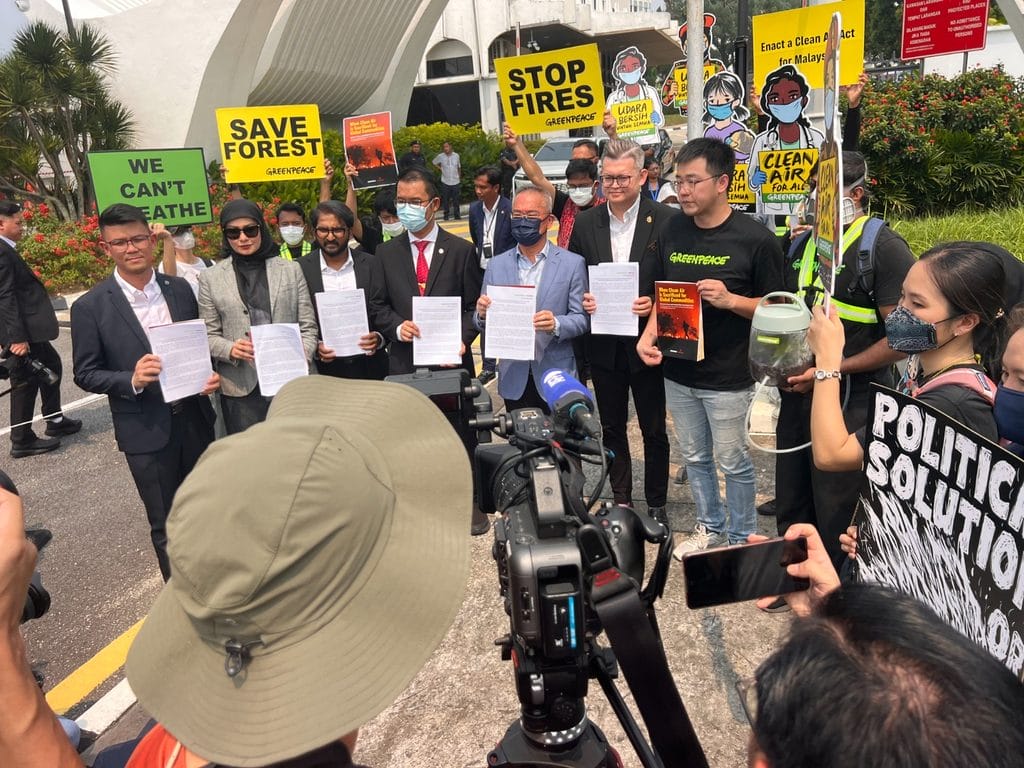
KUALA LUMPUR, Oct 10: Transboundary haze should be treated as a public health and environmental emergency, not simply a seasonal inconvenience, says Heng Kiah Chun, Greenpeace Interim Country Representative, Malaysia.
“Haze affects far more than air quality. It threatens public health, disrupts children’s education, affects workers’ livelihoods and creates economic losses. Vulnerable groups, including children, elderly people, outdoor workers and those with respiratory conditions, face particularly serious risks.”
Haze is also not an unexpected natural disaster but a recurring and largely preventable crisis, Heng said in an interview with Weekly Echo.
“We know the risks, we know the consequences and people have decades of trauma dealing with haze…so why we continue to tolerate a preventable crisis year after year.”
Why we continue to tolerate a preventable crisis year after year
Treating haze as an emergency means governments must respond with urgency, strengthen regional cooperation, protect affected communities and hold responsible parties accountable.
He also said more needed to be done by the government, especially enacting a law to regulate transboundary haze pollution.
On factors contributing to the crisis, Heng pointed at problems in land management, corporate accountability, governance and regional cooperation.
The clearing of land for agricultural expansion via burning, particularly on carbon-rich peatlands, creates significant risks of uncontrolled fires and prolonged smoke pollution, while enforcement of existing environmental laws remains a challenge.
He also said complex corporate ownership structures make it difficult to identify and hold responsible parties accountable.
The hotter and drier conditions (especially El-nino this year) have also made it more difficult to control the existing fires.
Regional cooperation meanwhile has not been sufficient, he said. “ASEAN established the Agreement on Transboundary Haze Pollution, but its effectiveness remains constrained by implementation gaps, national sovereignty concerns and limited regional enforcement mechanisms.”
“We have been discussing this crisis for more than decades. Malaysia and its neighbours have introduced policies, agreements and action plans, yet the problem continues.
“The fundamental issue is not a lack of awareness or policy commitments. It is the gap between those commitments and effective implementation, transparency and accountability. We must move beyond treating haze as a seasonal problem and address the structural drivers behind it,” Heng said.
He also suggested that the Malaysian government enact a Clean Air Act as recommended by the Human Rights Commission of Malaysia (SUHAKAM) in its Right to Clean Air report.
“Such legislation could hold Malaysian citizens and businesses accountable when their overseas operations contribute to haze pollution, deter irresponsible practices that increase the risk of fires, and reinforce public confidence that environmental responsibility extends across borders.
“Malaysia has previously acknowledged that cross-border environmental legislation is possible and recently mulls special law to handle transboundary haze. The opportunity now is to build on this recognition and take the necessary steps to turn it into reality.
He said Malaysia can also continue to play a constructive role in advancing environmental rights, regional cooperation and accountability across Southeast Asia.
“The National Action Plan on Business and Human Rights and the National Planetary Health Action Plan are putting Malaysia on the right track. Strengthening these efforts helps prevent cross-border environmental harm, improve corporate accountability and better protect communities from pollution and ecological degradation.”
–WE