Weekly Echo Pic
By Leslie Lim
At a record US$59,000 a metric ton in June, tin is back in the headlines. For anyone who sat through Ilmu Alam classes in the late 1970s, the news brings more nostalgia than surprise.
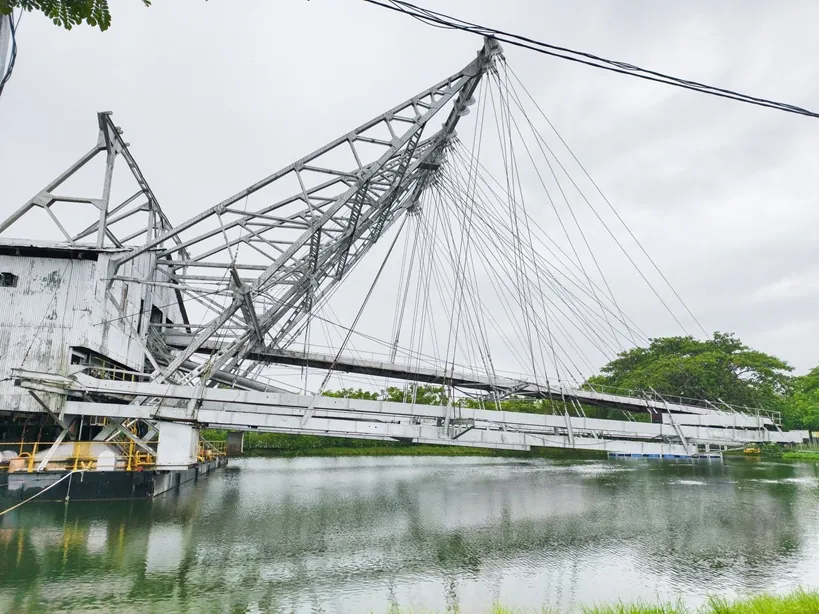
Long before it became essential to global high-tech supply chains, tin was simply part of daily classroom lessons – complete with diagrams of gravel pumps, the iconic kapal korek, and the Eastern Smelting (later Datuk Kramat Smelting) plant along Jalan Dato Kramat in Penang.
Back then, tin and rubber were the twin pillars of Malaysia’s economy. Textbooks mapped the rich deposits of the Kinta Valley – the heartland of world production – and celebrated the engineering marvels that powered a world-leading industry.
Malaysia reached peak production of nearly 77,000 tonnes in 1972, when tin traded around US$3,500 a tonne. It was a tidy sum for the era, and few imagined its dominance would fade.
That decline came swiftly. The collapse of the International Tin Council in the mid-1980s sent prices tumbling and accelerated Malaysia’s economic transformation.
Industrialisation, electronics manufacturing, palm oil, and petroleum soon took centre stage, leaving tin dismissed as a sunset industry.
Former open-cast mines and dredge ponds gave way to housing estates, commercial hubs, and highways. Townships from Kampar to Puchong and Subang rose from former mining land, burying a chapter of history beneath concrete.
The irony is striking. As Malaysia grapples with maturing oil fields and declining petroleum revenues that have supported the economy for decades, one of its oldest industries has quietly regained strategic importance.
Today, this is no longer a story about food cans. The hardware powering artificial intelligence – along with advanced semiconductors, solar panels, electric vehicles, and sophisticated electronics – all relies on high-purity tin solder to function. Without this unassuming “glue” of the tech world, global high-tech manufacturing would struggle to operate at scale.
Yet record prices will not signal a return to 1970s mining. Remaining reserves lie beneath densely populated urban areas or environmentally sensitive forests and water catchments.
The ecological costs – river siltation, habitat destruction, and land degradation – make large-scale open-cast mining neither practical nor desirable. Malaysia’s opportunity lies elsewhere.
The country remains among the world’s top 10 producers of mined tin – anchored by the Rahman Hydraulic hard-rock mine in Perak – and ranks among the top five producers of refined tin. Companies like Malaysia Smelting Corporation have modernised operations, solidifying Malaysia’s position as a global refining hub.
Rather than reopening old mines, the greater opportunity lies in moving further up the value chain, leveraging decades of processing expertise to serve the expanding technology sector.
History has a habit of rewarding what once seemed obsolete. Tin may never again dominate Malaysia’s economy as it once did, but from kapal korek to AI chips, one of our oldest metals has quietly secured a vital place in the digital age.
WE