By Leslie Lim
The recent “clarification” of Malaysia’s imported and CKD policies for electric vehicles (EVs) is, at best, a tactical retreat.
While Putrajaya frames these as strategic shifts to protect local investment, they highlight a deeper short-sightedness: a lack of clear vision that leaves the public and the industry guessing about what comes next.
The government’s expected move to rationalise RON95 subsidies later this week, targeting the T5 to T20 groups, is a necessary start, but it doesn’t go far enough.
Putrajaya can no longer afford to subsidise fuel to the tune of over RM50 billion a year. We have already seen this figure spike to a staggering RM7 billion in a single month due to the West Asian tensions and supply chain shocks.
A truly targeted fuel subsidy policy is a fiscal necessity that must transcend global oil prices. Even if Brent crude retreats to sub-US$70 per barrel, the structural drain remains.
With 800,000 new vehicles hitting the road annually, Malaysia could be hurtling towards becoming a full net oil importer as early as 2030 or 2031, assuming our production remains at about 350,000 barrels a day. We are effectively subsidising our way into an energy security crisis.
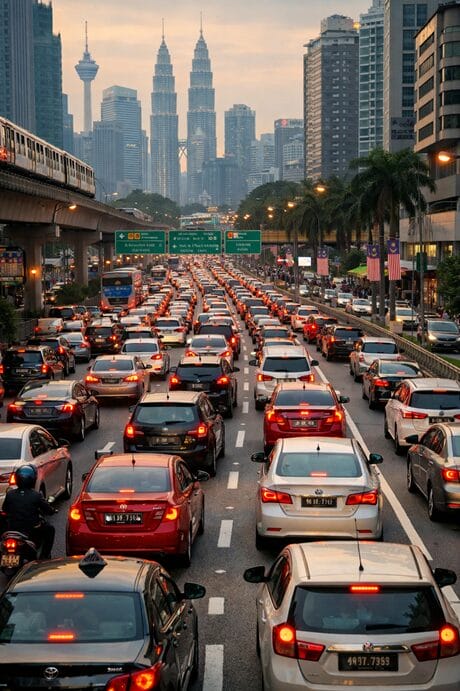
Prime Minister Datuk Seri Anwar Ibrahim must outline the bitter truth: Malaysians can no longer afford to be a car-centric population. Once the geopolitical dust settles, we cannot simply return to the status quo of subsidised congestion that burns fuel in our daily bumper-to-bumper crawl through Kuala Lumpur. Or other big cities in the country.
The strategy must be a “subsidies-for-service” swap. The billions saved from rationalising fuel must be directly reinvested into public transport and measures to help the working-class rakyat.
Specifically, funds should be poured into first and last-mile connectivity. It is pointless to have a world-class MRT system if the commute begins with a 20-minute struggle to find a bus or a safe walkway. This is a must-do thing. And immediately.
To date, our EV policies have been a masterclass in inconsistency. By imposing stricter conditions from 1 July, specifically the RM200,000 CIF floor and 180kW power minimum, we are forcing mid-tier Chinese brands to either “CKD or quit.” This leaves buyers in a limbo that gives a new lease of life to petrol-guzzling ICE cars.
Furthermore, until Perodua manages its EV “issues”, having registered a paltry 102 units of the QV-E since its December launch, the affordable market remains a Proton monopoly. Other CKD options aside, one must wonder: can Proton’s existing capacity even meet the potential surge in demand for affordable EVs now that more are thinking of “going electric” after Donald Trump started raining missiles into Iran from Feb 28?
Equally concerning is the fate of our charging infrastructure, with over 5,600 installations reported in early this year. With a possible slowdown in imported EV sales, private operators may tap the brakes on new installations. We cannot allow the expansion of charging points on open roads to stall just as it was gaining momentum.
Going forward, we need a master plan that looks beyond the next election cycle. This requires a definitive roadmap for fuel subsidies, aggressive incentives for “energy-friendly” commercial vehicles, and a nationwide charging blueprint.
Most importantly, we need a structural shift in urban planning that prioritises the “human-centric” city over the private vehicle.
Unless Putrajaya stops the flip-flops and commits to this holistic strategy, Malaysia will remain a nation stuck in second gear – buying cars we won’t be able to fuel efficiently and building infrastructure we won’t be able to use effectively.
We have weathered many bad storms before. We need cool heads to prevail again.