By Dr Rahim Said
There are many ways for politicians to leave their fingerprints on a city. Some build monuments. Some put their names on buildings.
Some unveil grand plans with artist impressions showing impossibly green parks, smiling children and bicycles that nobody appears to be riding.
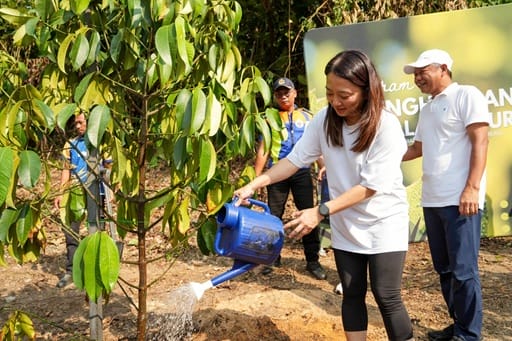
And then there is Hannah Yeoh. The Minister of Federal Territories has chosen something rather more inconvenient. She planted a tree.
Not a metaphorical tree. Not a “tree of transformation” in a PowerPoint presentation. A real tree, with roots that will hopefully outlive the political careers of those who planted it.
Yeoh, together with the Mayor of Kuala Lumpur, has adopted a corporate plot at Taman Tugu, each contributing RM50,000 towards a 3m by 3m plot that will eventually become home to two indigenous forest trees.
Yeoh planted the Merbau — Malaysia’s national tree, officially declared so in 2019. The Mayor planted a Sentul tree, which is particularly appropriate for Kuala Lumpur. At last, a government project where the most important thing being planted is not a flag.
It is a tree.
And perhaps that is precisely why the idea deserves more attention than it is getting. We have spent decades talking about making Kuala Lumpur a world-class city. World-class infrastructure. World-class public transport. World-class shopping malls. World-class skyscrapers. World-class traffic jams.
We have become exceptionally good at building a city that reaches for the sky. Perhaps we should also remember to give people something to look at when they look down.
Green space.
A city is not truly world-class because it has more concrete per square metre. It becomes civilised when a child can walk through it and still believe that nature belongs to him. That is what makes Taman Tugu different. It is not simply another park.
It is an investment in a Kuala Lumpur that our children — and their children — might actually enjoy rather than inherit as a concrete inheritance. The beauty of the tree-adoption idea is its simplicity. A corporation contributes RM50,000.
A small piece of land is adopted. Two indigenous forest trees are planted. And, assuming Kuala Lumpur does not suddenly decide that another condominium is more important, those trees grow.
Slowly. Patiently. Without holding a press conference every six months to announce their progress. That is an interesting concept in Malaysia. Trees understand something politicians occasionally forget: growth takes time.
A Merbau does not become a mature tree because somebody announces a five-year plan. It grows because somebody plants it, protects it and leaves it alone long enough to become what it was meant to become. Imagine if Malaysian corporations took up the challenge.
Banks. Property developers. Plantation companies. Telecommunications giants. Oil and gas companies. Manufacturers.
Government-linked companies. Universities. Foundations. Professional associations. Even individuals who have done rather well for themselves.
Instead of another trophy cabinet, another corporate dinner, another commemorative plaque or another advertising campaign telling us how committed a corporation is to “sustainability”, why not adopt a piece of the city’s future?
One corporation, one plot. One family, one plot. One school, one plot. One alumni association, one plot. One company celebrating its 25th anniversary, one plot.
One politician completing a term in office — well, perhaps we shouldn’t get carried away. But you get the idea.
And perhaps the corporate adopters could resist the temptation to turn the trees into giant advertisements for themselves. Let the trees be the advertisement. Let the shade be the dividend. Let the children be the shareholders.
That would be corporate social responsibility with a rather refreshing return on investment. No quarterly earnings report. No share-price volatility. No CEO bonus.
Just oxygen, shade, biodiversity and a piece of Kuala Lumpur becoming a little less hostile to human beings. There is also something symbolic about the choice of trees.
The Merbau is Malaysia’s national tree. It is indigenous. It belongs here. And the Sentul has a historical association with Kuala Lumpur. In other words, these are not imported decorative ornaments brought in to make the city look green for Instagram.
They are part of our own ecological heritage. Perhaps this is where the Taman Tugu idea becomes bigger than Taman Tugu itself.
It asks a rather uncomfortable question: What kind of city are we actually building?
One where every vacant piece of land is eventually measured by its commercial potential? Or one where some land is deliberately protected because its value cannot be measured in ringgit? A tree does not generate a property developer’s kind of return.
You cannot sell its shade by the square foot. You cannot charge a maintenance fee for birds nesting in it. You cannot launch an initial public offering for its branches. But ask a child sitting underneath that tree 30 years from now whether it was valuable. She will know.
This is why Hannah Yeoh deserves praise for thinking beyond the usual political horizon. Politicians are normally trapped by the next election.
Trees operate on a different calendar. They think in decades.
Taman Tugu therefore offers Kuala Lumpur something politics rarely does — a legacy that doesn’t require a plaque explaining who deserves credit for it. So here is a challenge to Malaysia’s corporate sector.
Don’t just sponsor another event. Don’t just put your logo on another banner. Don’t just issue another sustainability report full of photographs of executives standing beside saplings. Adopt a plot.
Put RM50,000 into something that will still be standing long after the annual report has been forgotten. Plant an indigenous tree. Then come back in 20 years.
If Kuala Lumpur is greener, cooler and more beautiful because of what you did, that will be one corporate achievement worth remembering. And perhaps one day, a child will sit beneath that Merbau or Sentul tree and ask her father:
“Who planted this?” And the father can say: “People who cared enough about the future to plant something they knew they might never live long enough to enjoy.”
Now that would be a legacy. Not a skyscraper. Not a slogan. Not another politician’s portrait. A tree. And some shade for the future.
Perhaps that’s the Kuala Lumpur Hannah Yeoh is asking us to imagine. For once, it is a political vision worth growing.
WE