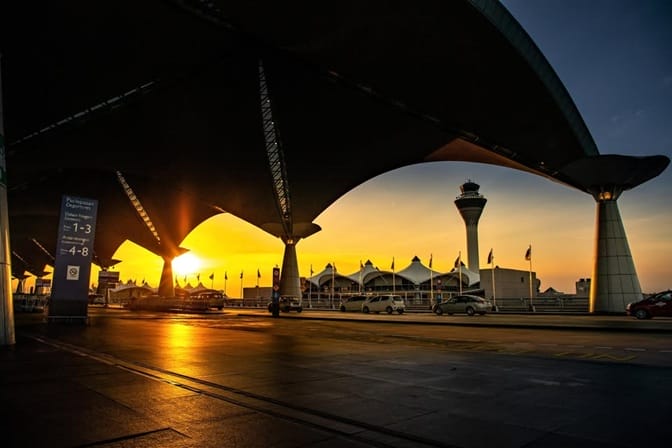
Photo Credit: KLIA FB
By Leslie Lim
For decades, Malaysia has fought to carve out a meaningful place in Asia’s aviation map. Building a true hub has never been easy — KLIA’s strategic relevance and our carriers’ competitiveness have often been questioned.
AirAsia, however, rewrote the rules. Now Asia’s largest low-cost airline by passengers and fleet, it turned KLIA into a powerhouse of regional traffic. Yet the airport has long struggled to step into the premier league of long-haul travel.
That is why Airbus’s recent nod to Malaysia as a potential “third megahub” in Asia—alongside Singapore and Hong Kong—feels like a turning point.
KLIA is already Southeast Asia’s second busiest airport. In 2025, it handled 63.3 million passengers, overtaking Bangkok’s Suvarnabhumi and closing in on Changi’s 69.98 million. This surge was powered by AirAsia’s expansion into Central Asia, a revitalised Malaysia Airlines, and new regional entrants.
But volume alone does not make a megahub. Bangkok hosts nearly 120 airlines; KLIA just over 70. The gap is glaring in long-haul connectivity. Today, only British Airways and KLM fly in from Europe, a far cry from the 1990s when Kuala Lumpur welcomed 10 European carriers plus Qantas, Air New Zealand, and even Northwest Airlines from the US.
That golden era was eclipsed by the Gulf carriers, whose rapid rise siphoned off traffic that once sustained direct routes. Reviving those links is tough, especially amid geopolitical volatility — COVID’s aftershocks and the current West Asia crisis have dampened appetite for long-haul expansion.
Still, green shoots are visible. Lufthansa returns this October with flights to Frankfurt. AirAsia X is pivoting back to long-haul, launching Almaty, Tashkent, and soon London Gatwick via Bahrain. These moves signal intent, but the question remains: will other legacy carriers follow, or continue funnelling Malaysian passengers through Singapore and Bangkok under the weight of global alliances?
History reminds us of the uphill climb. In 1985, it took former British Prime Minister Margaret Thatcher’s intervention to break the MAS–British Airways deadlock and secure more London flights. Kuala Lumpur’s geography — wedged between two giants — has always been its curse.
The ambition for megahub status is finally clear. The last hurdle is convincing the world’s airlines to bypass the “sandwich” and land here.
The views expressed here are entirely those of the writer
WE