Image Credit: Copilot
By Dr Rahim Said
Ramadan has a funny way of unlocking old memories. As the last days slip by and Hari Raya begins peeking over the horizon, my mind often wanders back to a time when ambition was measured not in stock options or startup valuations, but in how many pieces of ice you could sell before it melted.
In the 1950s in Alor Setar, refrigerators were about as common as unicorn sightings. A few colonial officers had them, some senior civil servants perhaps, and the wealthy towkays who probably kept their drinks nicely chilled while the rest of us relied on fans, shade, and divine patience.
For everyone else, there was the town’s great equaliser — the kilang ais, the ice factory, located not far from the birthplace of a young boy who would later grow up to become prime minister, Tun Dr Mahathir Mohamad. The road, quite sensibly, was called Lorong Kilang Ais. Malaysians have always preferred practical names.
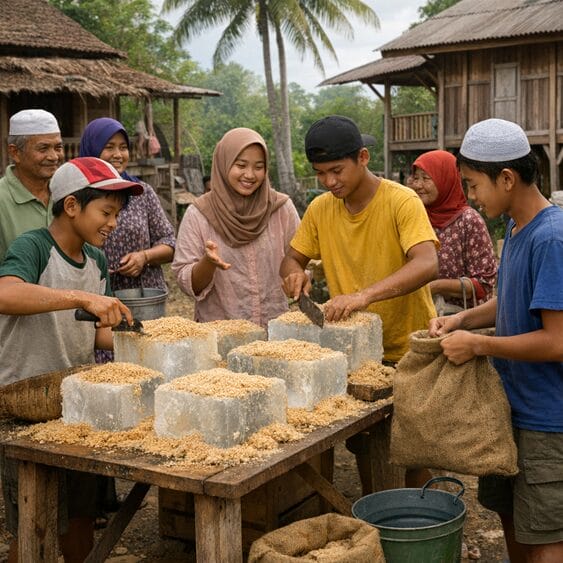
Every Ramadan, the entrepreneurial spirit would suddenly awaken among teenage boys in my neighbourhood. The business idea was simple and brilliant: sell ais ketul — chunks of ice — to families preparing their drinks for buka puasa. The objective was not global domination or a unicorn valuation. It was much more realistic.
Earn enough money to buy something new for Hari Raya.
Against the wishes of my family, who were convinced their son had mistaken a melting block of ice for a sound financial strategy, I launched my own roadside venture with a grand capital of RM10.
Ice, unfortunately, is a product that has a strong desire to disappear. Which meant that timing was everything.
After studying the veterans of the trade — my version of an MBA programme — I discovered something extraordinary about the market. Customers only appeared between six and seven in the evening.
Exactly one hour. That was my entire business day.
Today, clever consultants might call that “Just-in-Time inventory management.” At the time, I called it “sell fast before everything turns into water.”
The real secret, however, was sawdust. Without sawdust to insulate the ice block, the entire business would collapse faster than a politician’s promise after polling day. So each afternoon, I had to sweet-talk the towkay of Kedah Ice Works to make sure my block of ice arrived around six, and persuade the sawmill owner to spare me buckets of sawdust before he closed shop at five.
Looking back, I realise I was learning supply chain management long before anyone invented the term.
Then came the delicate art of slicing the ice. Too thin, and customers complained they were overpaying. Too thick, and my profits vanished. The trick was to cut it thin enough to make a margin, yet large enough to look generous to a fasting customer handing over 10 sen.
Profit margin, product design and customer satisfaction — all practised under the Kedah evening sun without the benefit of a management textbook.
Packaging presented another challenge. Banana leaves were plentiful behind the house, but they were slippery and not ideal for holding cold, melting ice sprinkled with sawdust. The newspaper turned out to be perfect.
But old newspapers were not free.
Shopkeepers sold them, and my father, an avid reader, refused to part with his papers until he had clipped out every article he fancied. By the time he finished, the pages looked like Swiss cheese.
So I did what every young entrepreneur eventually learns to do. I expanded my network. Friends became suppliers. Old newspapers arrived from various mysterious sources. No contracts, no invoices — just goodwill and the universal teenage currency of friendship.
By the end of Ramadan, my little enterprise had made a grand total of RM30.
It was not the sort of figure that would excite venture capitalists today, but to me it felt like discovering oil in my backyard.
Hari Raya was approaching, and suddenly I had spending power.
I still remember walking into the Bata shop with the confidence of a young tycoon and buying a pair of shoes for RM9.99. With the remaining fortune, I secured a pair of trousers and a shirt for Raya. To this da,y I suspect I walked out of that shop about two inches taller.
The shoes shone like victory. The trousers felt like success.
And the shirt — well, that shirt carried the quiet pride of a boy who had earned his Raya outfit selling melting ice by the roadside.
There was no award ceremony. No “Young Entrepreneur of Kedah” trophy. My parents merely smiled in that knowing way parents do when a child learns a lesson the hard way and survives.
But every Ramadan, as the fasting month draws to a close and Hari Raya begins to stir the air with excitement, that memory returns. The smell of sawdust. The nervous slicing of ice. The anxious glances at the setting sun.
And the pure, ridiculous joy of walking into Bata with RM30 earned honestly in sixty-minute business days.
For novices dreaming of their first venture, the lesson is simple. Every grand business empire probably begins with something small, slightly ridiculous, and mildly disapproved of by one’s parents.
Mine just happened to melt if I didn’t sell it quickly enough.