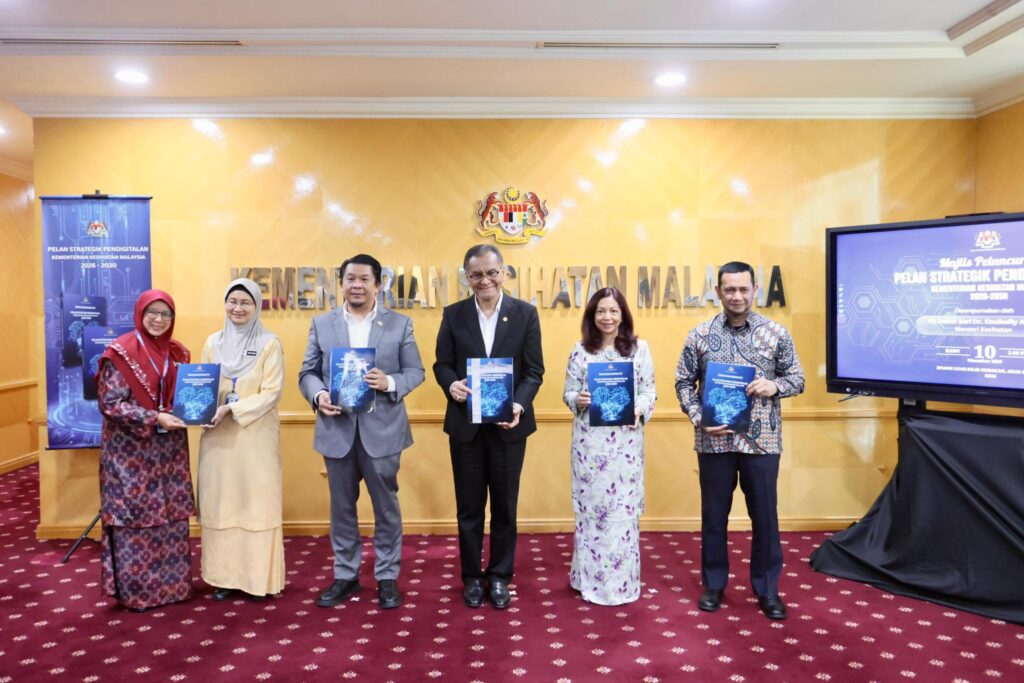
KUALA LUMPUR, Dec 10 (Bernama) — The empowerment of the digitalisation agenda through the ‘One Citizen, One Record’ electronic medical record approach is the main focus in transforming the country’s healthcare system, said Health Minister Datuk Seri Dr Dzulkefly Ahmad.
He said its implementation will enable the healthcare sector to be strengthened to ensure patient information can be accessed accurately and quickly, reducing duplication of records, minimising the risk of wrong information and supporting the delivery of higher quality clinical services.
“This digitalisation must eventually lead to what is known as ‘One Citizen, One Record’, which is a national electronic medical record that is truly interoperable and, subsequently, far more effective patient care and population care.
“We need a national electronic medical record where public and even private hospital-to-hospital and clinic-to-clinic are interoperable. So, you have horizontal integration, you have vertical integration,” he said.
He said this during Bernama TV’s ‘Ruang Bicara’ programme, which discussed the topic on Reformasi Kesihatan MADANI: Mendepani Cabaran Struktur (MADANI Health Reform: Facing Structural Challenges) tonight.
According to Dzulkefly, the digitalisation effort is being driven comprehensively from the primary care stage, including the use of the Cloud-based Clinic Management System (CCMS) in health clinics nationwide.
As of Oct 17, he said that 160 health clinics had been digitalised, and the Health Ministry is targeting 2,489 primary healthcare facilities, including health clinics, maternal and child clinics, community clinics and rural clinics, to undergo the same process by 2028.
In addition, Dzulkefly said a total of 956 dental clinics will be fully digitalised by 2027, while the Electronic Medical Record (EMR) system will be implemented in 136 hospitals nationwide by 2029.
He said that the implementation of the national health digital system will help in significantly reducing patient waiting time, including simpler appointment processes, follow-up treatments and dispensing of medicines.
“Previously, patients might have to bring along X-ray films, MRI (magnetic resonance imaging) and so on, but now, if I may give an illustration, by definition, with the National EMR, wherever the patient goes, the method is interconnected and interoperable.
“Wherever the clinic is, with your digital identity, when patients come in (for treatment), the patients should not be asked what illness they have, what allergies they have, what procedures they have had, what medication they are taking… all patients should only be asked these questions once,” he said.
Dzulkefly said the ultimate goal of the transformation is to enable full integration between the public and private sectors to create a truly holistic national healthcare ecosystem.
— BERNAMA