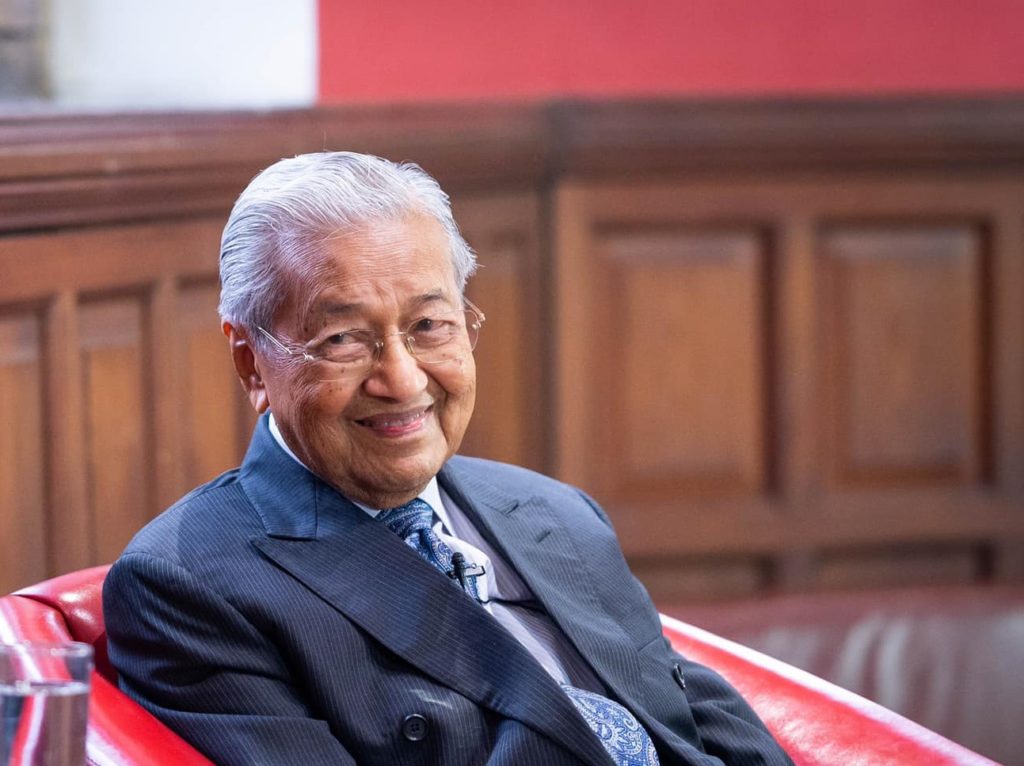
By Santhia Panjanadan
On November 17, 2025, Weekly Echo’s contributor Santhia Panjanadan got the opportunity to have a chat with former Prime Minister Tun Dr. Mahathir Mohamad. The subject was technology and innovation and Mahathir’s input on AI, and the years ahead for Malaysia.
KUALA LUMPUR, Dec 6: Few Malaysians can say they have witnessed every major technological shift of the modern nation, from handwritten letters and radio broadcasts to smartphones and artificial intelligence (AI).
At 100, former prime minister Tun Dr Mahathir Mohamad has seen them all, and he believes Malaysia’s digital journey, while imperfect, remains very much on course.
Reflecting on the nation’s progress, he said: “We are not far behind, but we are not as advanced as I would like to see,” adding that while Malaysia adapts quickly to new technology, progress could be faster.
Dr Mahathir said Malaysia has traditionally approached technological innovation with a cautious but strategic mindset, allowing others to move first before applying lessons learned.
“The world is moving fast, and we allow others to do things first. We observe, we learn, and then we apply,” the centenarian leader said in a recent interview with Weekly Echo, noting that mistakes along the way are part of the learning process.
Recalling the early days of the Multimedia Super Corridor (MSC), his brainchild project, Dr Mahathir said Malaysia was among the first countries to recognise the convergence of media and treat multimedia as a form of information technology.
“Suddenly, we realised there were so many ways of informing people — by books, by word of mouth, by radio, by television. They were all coming together,” he said. “Television could even enable us to do all the other things, including reading. That is when we decided to treat them as information technology and created a multimedia information area.”
More than three decades after the MSC was introduced, he said Malaysia’s digital journey continues to evolve, guided by the same principle of learning, adaptation and purposeful use of technology.
On whether Malaysia could still produce a digital flagship, the Malaysia’s elder statesman opined that the country has often been a pioneer, particularly in multimedia, though the pace of adoption could be improved.
Turning to AI, he said he continues to understand the technology through observation rather than formal study.
“When people talk about AI, I know nothing about it. But over time, I learn. I observe what people are doing, understand it, and then extend the knowledge to other areas,” he said.
Dr Mahathir who helmed the country as prime minister for a total of 22 years stressed that AI should be viewed as a tool, not a threat.
“AI is an invention of man. Human beings will always have some control over their invention.
“It has to be instructed. You need data, and only then can it deliver results. We should be in charge of AI, not the other way around,” he explained.
According to him, the primary value of AI lies in its ability to provide quick access to information, replacing what was once a tedious process of searching libraries, books and pages for answers.
“It’s a matter of choice,” he added, noting that technology can be used constructively or otherwise, depending on the user’s judgement and values.
Dr Mahathir also addressed concerns over misinformation and deepfakes, warning that digital tools can shape public opinion if misused.
“Information gives power. A person with knowledge knows what others don’t, and that gives them power.
“You’re given a knife, one can use it to harm or to create something beautiful,” he expressed.
He expressed concern for the younger generation, saying their familiarity with AI may not be matched by historical perspective.
“The younger generation sees AI as natural. Without comparison, they don’t understand its advantages. They often use it merely for ordinary information,” he said.
Despite these challenges, Dr Mahathir said AI could create new forms of employment, drawing parallels with technological disruptions.
“Likely AI will create intelligent jobs, not the same as before, but new kinds of opportunities,” he said. “New areas of business will be created through problem-solving and the application of information.”
As Malaysia navigates emerging areas such as AI, cybersecurity and digital trade, he said the country must continue strengthening its fundamentals, particularly fast and reliable access to information.
—WE