By Chiang Hee Tze
BEIJING, Dec 28: Six seconds. Just enough to blink, breathe, or feel your pulse. At Xiaomi’s Changping plant, it’s also the time it takes to produce a smartphone — a marvel of speed, automation, and ambition.
The six-second production cycle reflects a high level of industrial precision and system coordination, with key testing processes, including automatic camera autofocus calibration, display brightness and colour checks, battery performance and thermal management, all completed within that timeframe to ensure quality at every stage.
On its highly automated and digitised production lines, robotic arms perform precise operations while integrated systems manage real-time calibration and every six seconds, a smartphone completes its critical production phases and rolls off the line, demonstrating the facility’s efficiency and advanced manufacturing capabilities.
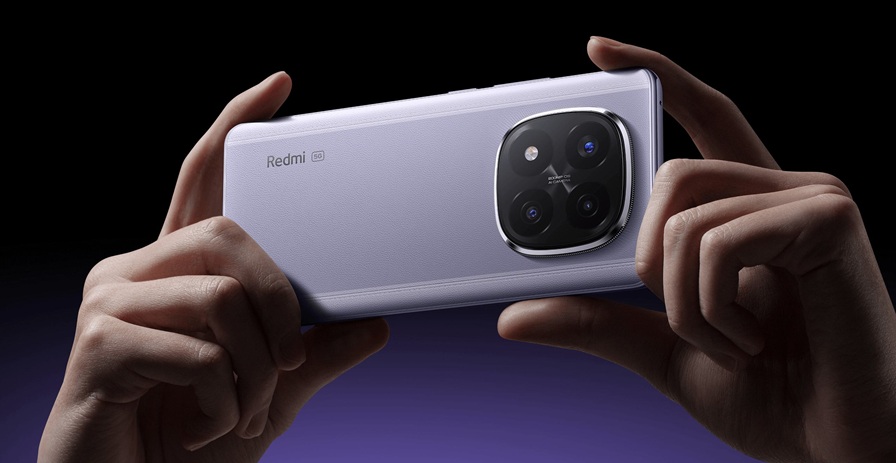
In early December, Xiaomi opened its Changping smartphone factory for the first time to foreign media, specifically Southeast Asian outlets, showcasing its high level of automation and self-developed systems to highlight its manufacturing standards and product reliability ahead of its next-generation REDMI smartphone launch.
The factory is powered by the Xiaomi Hyper Intelligent Manufacturing Platform (IMP), which automatically monitors all production stages, including efficiency, quality and anomalies, while tracking material inventory in real time and triggering automatic replenishment to ensure high output and consistent quality.
REDMI Marketing Director, Xiaomi International Marketing Department, Cynthia Chen, told Bernama during the visit that while Xiaomi is a household name, most people are unaware of the extensive and sustained research and development (R&D) behind its products.
She said continuous, high-intensity R&D forms the foundation for Xiaomi’s long-term development in product reliability, manufacturing and innovation, adding that since 2016, the company has strategically established a global network of advanced laboratories to strengthen these core capabilities.
According to Chen, the network today spans over 730 laboratories across 11 cities worldwide, covering more than 40,000 square meters, with the Xiaomi Beijing Campus Laboratory, inaugurated in October 2019 standing as its flagship facility.
The campus houses more than 140 individual laboratories within a 12,000-square-meter space, supporting extensive R&D across domains including acoustics, radio frequency (RF), antenna design, electromagnetic compatibility (EMC), baseband, mechanics, optics, touch control, thermal design, power consumption, battery reliability, and software stability.
In the first three quarters of 2025, Xiaomi invested 23.5 billion yuan (1 CNY = RM0.59) in R&D, nearly matching its total expenditure for the whole of 2024, with spending in the third quarter alone reaching a record high of 9.1 billion yuan, up 52.1 per cent year-on-year.
Spanning a total site area of 81,000 sq metres, the smartphone factory focuses on flagship phone production and is Xiaomi’s first self-owned, large-scale smart factory, marking a key milestone in the company’s intelligent manufacturing journey.
With over 96.8 per cent of its hardware and all manufacturing software self-developed, the facility enables highly efficient and precise production, averaging one smartphone every six seconds for an annual capacity of up to 10 million units.
This writer observed that Xiaomi’s Automated Control Platform covered equipment operation, testing workflows, machine vision inspection and production line balancing, achieving a high degree of automation that significantly reduced manual intervention while improving overall efficiency and consistency.
Chen said the factory’s 81 per cent automation rate ensured productivity while minimising operational risks. While Xiaomi aimed for zero defects, it currently maintains a 99 per cent yield rate, exceeding the industry standard of 98 per cent and reflecting its high manufacturing and quality benchmarks, she added.
In its third quarter 2025 financial results, Xiaomi reported a fourth consecutive quarter of revenue exceeding 100 billion yuan, with revenue rising 22.3 per cent year-on-year to 113.1 billion yuan and adjusted net profit reaching a record high of 11.3 billion yuan, up 80.9 per cent year-on-year.
According to Canalys’ third quarter 2025 international market report, Xiaomi holds a 14 per cent share of the global smartphone market, remaining among the world’s top three players. In Southeast Asia, and Malaysia specifically, the company continues to strengthen its presence, maintaining the top position locally with a 21 per cent market share.
The media delegation also toured Xiaomi’s electric vehicle (EV) factory in Beijing’s Economic and Technological Development Zone (Beijing E-Town), observing the company’s ‘Technology-First’ approach in action, where more than 700 robots operate in a highly coordinated and precise manner.
–BERNAMA