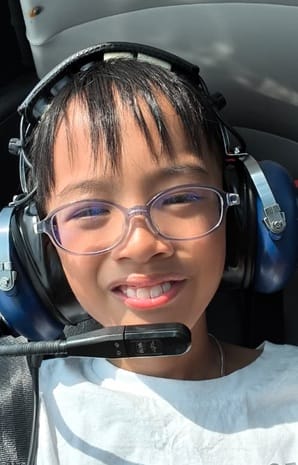
Ethan…humming A Free Bird
By George Das
While driving, “Free Bird” came over the air — that nine-minute signature song by Lynyrd Skynyrd.
“If I should leave here tomorrow, would you still remember me?” Ronnie Van Zant sang, his distinctive voice filling the car.
And in the rear seat was my grandson, Ethan Rai, who had just turned 10. He was humming along. He surprised me.
I asked him if he knew the name of the Southern rock group. His reply was instant — without pride or drama.
“Lynyrd Skynyrd.”
Wow! He was into my repertoire. Here was a youngster who wasn’t even born when the band’s original lineup had long disappeared, humming along to a song first released more than half a century ago.
That got me thinking. I had to re-listen to Lynyrd Skynyrd again. And I had to dig out my old records.
“Free Bird” first appeared on Lynyrd Skynyrd’s 1973 debut album, Pronounced ‘Lĕh-‘nérd ‘Skin-‘nérd. The band had actually been developing and performing the song before the album was recorded, and an earlier demo dates from 1970.
Guitarist Allen Collins and lead singer Ronnie Van Zant wrote the song. There is a wonderful story behind its opening question.
Collins’ girlfriend, Kathy Johns, who later became his wife, had asked him a question along the lines of whether he would remember her if she left him. That thought eventually found its way into the song’s opening lyric.
But the song did not suddenly spring into existence. Collins had been working on the guitar progression for some time. According to guitarist Gary Rossington, Van Zant initially found the changing chords difficult to work with. Eventually, after Collins played the progression again at rehearsal, Van Zant began shaping a melody and lyrics around it.
The song continued to evolve. The extended guitar ending that would eventually make “Free Bird” legendary was developed through the band’s live performances. What began as a relatively straightforward ballad gradually became the enormous guitar finale that audiences came to expect.
That finale also gave Van Zant a chance to rest his voice during the band’s demanding club performances. By the time the band recorded the album version, “Free Bird” had become an epic — beginning quietly and building toward one of rock’s most recognisable guitar passages.
The studio recording runs for about nine minutes. Live, it could stretch considerably longer, sometimes passing the 14-minute mark.
And that was the magic of Lynyrd Skynyrd. They could take a song and make it feel as though it belonged not merely to a record but to the stage.
There is another important part of the song’s history. “Free Bird” was not written as a tribute to Duane Allman and Berry Oakley. The song already existed before their deaths.
But after Allman and Oakley — both members of the Allman Brothers Band — died in separate motorcycle accidents, Ronnie Van Zant began dedicating the song to them in performance. Van Zant referred to them as “free birds.”
That connection became part of the song’s mythology and its emotional history. It was particularly fitting because the Allman Brothers were among the musicians who had influenced Lynyrd Skynyrd and helped shape the Southern rock sound.
So “Free Bird” acquired another meaning. It was no longer simply a song about love, freedom and leaving. It had become a remembrance.
Lynyrd Skynyrd were part of the great Southern rock movement of the 1970s, blending blues, country and hard rock into a sound that became unmistakably their own. “Sweet Home Alabama,” from their second album, Second Helping, became their biggest commercial hit.
But “Free Bird” became something different. It became their signature… an anthem! It was a concert staple and, over the years, one of the defining songs of classic rock.
It has also lived far beyond the era in which it was written — appearing in films, television and sporting culture and continuing to be played by radio stations and live bands decades after the original recording.
For many listeners, those opening piano notes are enough. They know what is coming. Then comes Ronnie Van Zant’s voice. And eventually those guitars take over.
All this reminded me that I had a few Lynyrd Skynyrd records in my collection. So I kept searching through the stacked albums.
I was surprised. I had seven albums. Two were double albums, including a live recording. They certainly weren’t in mint condition. They had been sitting there for years, after all.
But I put one on the turntable. And they still sounded great. There is something special about playing music on a record that you bought decades ago.
You don’t simply hear the music. You remember where you were. You remember the period of your life when you listened to it.
You remember the people around you. And suddenly, an old record isn’t merely an old record. It becomes a time machine.
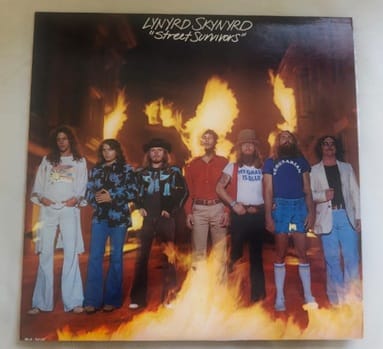
Of the seven albums, one immediately caught my eye. Street Survivors! The fifth studio album by Lynyrd Skynyrd was released on October 17, 1977. The original cover showed the band standing on a city street, surrounded by flames.
There was something eerie about it. Three days later, on October 20, tragedy struck. The band’s chartered Convair CV-240 aircraft ran out of fuel while flying from Greenville, South Carolina, toward Baton Rouge, Louisiana. The aircraft crashed near Gillsburg, Mississippi. Ronnie Van Zant was killed.
So were guitarist Steve Gaines, his sister and backing singer Cassie Gaines, assistant road manager Dean Kilpatrick, pilot Walter McCreary and co-pilot William Gray. Other members of the band and crew survived, many seriously injured. Ronnie Van Zant was only 29.
And suddenly Street Survivors became something much more than another Lynyrd Skynyrd album. Because of the tragedy, MCA Records withdrew the original flaming cover and replaced it with a photograph of the band against a plain black background. The original artwork was restored for later releases.
Looking at that record on my shelf all these years later, I couldn’t help thinking about Ronnie. The voice that had come through my car speakers.

The voice that had made a 10-year-old Ethan hum along. A voice recorded more than half a century ago. And yet, somehow, still alive. Perhaps that is what music does. It refuses to leave us.
A song can sit quietly on a record shelf for years, waiting. Then one day, it comes over the radio while you’re driving with your grandson. And suddenly you are back there again. Only this time, someone from another generation is singing along with you. Today I too am a “Free Bird.” Just flying with time.
WE