By Professor Dato Dr Ahmad Ibrahim
The world has long been preoccupied with sustainability. Almost on a daily basis, we see sustainability plastered on the pages of the news media.
The social media is no less active as well. Many question whether the world is on the right track to sustainability. Let’s be honest: you’ve heard the word “sustainability” so many times it’s starting to lose meaning. Companies slap it on products. Governments make promises. We recycle our bottles and feel a little better.
And yet, the problem is still getting worse. The oceans are heating up. Species are disappearing. There is no let up in the episodes of extreme weather conditions. And every year, we hear that we’ve missed another deadline. So here’s the uncomfortable question: Can we truly achieve sustainability?
Can we assure the needs of future generations are not compromised as we continue to extract resources from the planet? Or are we just lying to ourselves? The short answer is yes—but not the way we’re doing it now.
Some refer to it as dealing with the hole in the boat. Right now, our approach is like trying to bail water out of a sinking boat using a teaspoon while five people are still drilling new holes. We talk about “green” products, but we keep producing more stuff.
We plant a tree, then clear a forest for a new shopping mall. We set goals like the SDGs, Sustainable Development Goals, but we don’t give them teeth. Is it because our activities in the world, economic and otherwise, are not ruled as fulfilling baroqah?
The dirty secret is that most sustainability strategies so far have been about feeling responsible, not being responsible. They are designed to avoid pain—for our economies, our habits, and our profits. So, what do we desperately need?
If we are serious about leaving lifesaving resources—clean water, fertile soil, stable air, and critical minerals—for our grandchildren, we don’t need another fancy summit or a new color of recycling bin. We need three ugly, difficult things.
First, we need honest accounting. Right now, destroying a forest is considered “profit” and cleaning up pollution is labelled as “cost.” That’s backwards. We need to force every company and government to pay for the damage they do to nature, the
same way they pay for electricity or labor. When it becomes cheaper to be clean than to pollute, the market will finally work for the planet.
Second, less is more. I’m sorry, but we cannot grow our way out of this. The average rich country uses way more than its fair share. Sustainability means the wealthy must consume less—less fast fashion, less flying, less disposable everything. Not
poverty. Just enough. That’s a hard sell, but it’s physics, not politics.
Third, we need a short-term pain agreement. The biggest lie is that we can save the planet without sacrificing anything. We can’t. We desperately need leaders who will tell the truth: we will have to spend money, change jobs, and redesign our cities now
so our kids aren’t fighting over drinking water later. But this is no easy task.
So, can we do it? Honestly? Technically, yes. We have the solar panels, the plant-based foods, the public transit designs. We know how. But morally and politically?
The clock is ticking. We are not failing because we lack solutions. We are failing because we refuse to share the burden. Rich nations want to keep their lifestyle. Poor nations want to catch up. And the planet is caught in the middle.
The only way we can truly achieve sustainability is if ordinary people stop treating it as a “nice to have” and start treating it like a non-negotiable demand. Not by changing lightbulbs, but by voting, boycotting, and accepting that our own lives might
have to become a little less convenient.
So yes, sustainability is possible. But only if we stop pretending. The question isn’t “can we?” anymore. It’s “will we grow up in time?” Let’s hope so. For the kids’ sake.
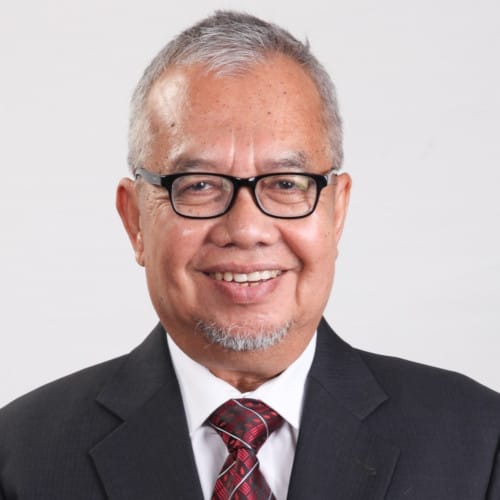
Professor Dato Dr Ahmad Ibrahim is affiliated with the Tan Sri Omar Centre for STI Policy Studies at UCSI University and is an Adjunct Professor at the Ungku Aziz Centre for Development Studies, Universiti Malaya. He can be reached at ahmadibrahim@ucsiuniversity.edu.my
The views expressed in the article are that of the author’s and not necessarily that of Weekly Echo’s