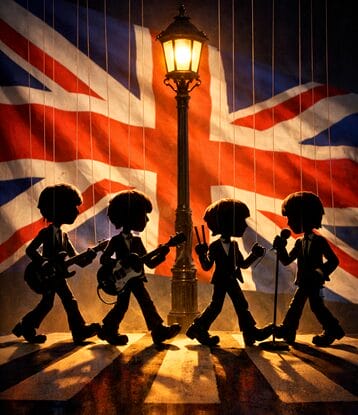
Image Illustration Created by Copilot
By Dr Rahim Said
I was in Lower Six at Sultan Abdul Hamid College, Alor Setar, in the glorious summer of 1966 when England won its one and only FIFA World Cup, defeating West Germany 4-2 in the final at Wembley. To an Englishman, it was proof that the sun had not quite finished setting on the British Empire.
The morning after the match, youthful confidence got the better of me. I told our English Literature teacher, a young Volunteer Service Overseas (VSO) teacher from Britain, that England was no longer a great country.
He looked at me as though I had just insulted Shakespeare, Churchill and fish-and-chips in one sentence.
“We won the World Cup last night, didn’t we?” he replied.
I had chosen the worst possible day to argue with an Englishman.
Sixty years have passed since that unforgettable July. England has spent much of those six decades treating 1966 rather like an elderly uncle who insists on showing everyone his wedding photographs. Every major tournament begins with renewed optimism, every newspaper rediscovers the ghosts of Wembley, and every supporter whispers the immortal phrase: “This time.”
Or, as we Malaysians like to put it, “Ini kali lah!”
Whether this year finally delivers another trophy remains to be seen. England’s clash with Argentina may provide another chapter in football’s oldest soap opera. By July 15, the answer will be known.
But back in 1966, my teacher had another lesson planned.
“If you think Britain isn’t great,” he smiled, “come to the Assembly Hall tomorrow. We’ll show you.”
The next morning the entire school gathered before what looked like an elaborate puppet theatre. Our teacher disappeared behind the curtains. The lights dimmed.
Then came the unmistakable opening bars.
“Yeah, yeah, yeah…”
Suddenly four puppets sprang to life.
There they were — the Beatles.
John, Paul, George and Ringo, dressed in their trademark suits, sang, danced and bowed with astonishing realism. For nearly an hour the puppet show captivated every student in the hall. It was witty, musical, beautifully choreographed and unlike anything we had ever seen in school.
For many of us, that was our first proper introduction to Beatlemania.
The applause was thunderous. Long after the curtains closed, we continued talking about “the Beatles” who had somehow visited Sultan Abdul Hamid College. In our teenage imagination, Liverpool suddenly felt much closer to Alor Setar.
As we filed out of the hall, my English teacher caught my eye.
“Now,” he said with a mischievous wink, “that’s what makes Britain great.”
Looking back today, I realise he was never really talking about football.
The World Cup was merely the opening act.
Britain’s real strength lay in something less measurable: its literature, music, humour, theatre, language and extraordinary ability to export culture to every corner of the world—even to a school assembly hall in Kedah.
The empire may have faded, but Shakespeare still filled classrooms. The Beatles conquered radios more effectively than battleships ever conquered oceans. British wit travelled farther than the Royal Navy.
Perhaps that was Britain’s greatest victory of all.
Even today, when England loses on penalties with almost contractual regularity, the world still sings Beatles songs, quotes Shakespeare and laughs at British comedy.
Not bad for a country that some of us foolish teenagers once declared was no longer great.
As for my teacher, he won that argument without raising his voice.
All it took was four puppets, a Beatles song and one unforgettable school assembly.
Some lessons remain with us long after the final whistle has blown.
WE