By Dr Rahim Said
Some people travel because they love discovering new places. Some people travel because shopping is cheaper.
And then there is a very special species of traveller who arrives at a petrol station with a camera already switched on, a passport conveniently in hand, and an irresistible urge to audition for social media.
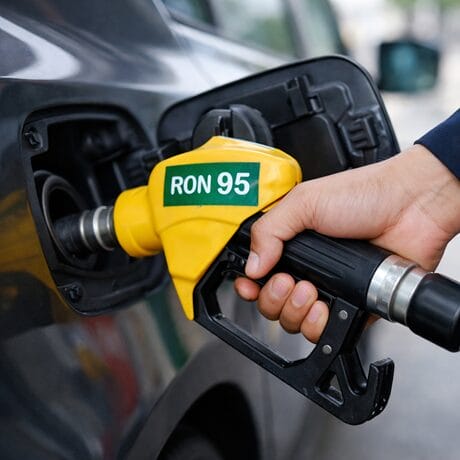
Judging from the screenshots, this latest performance involved someone theatrically displaying a Singapore passport while pumping RON95, accompanied by the caption: “How to piss off Malaysians as a Singaporean. Step one. Steal their petrol.”
Notice something. Not “save money.” Not “fill up.” Not even “road trip.” The objective was to annoy. Mission accomplished — at least in cyberspace.
There is a uniquely Singaporean word that perfectly captures this behaviour: kiasu — the fear of losing out. But this modern version has evolved.
It is no longer enough to save a few dollars. One must also collect likes, outrage and viral attention. Why quietly enjoy subsidised fuel when you can turn it into performance art?
It is as though the petrol itself tastes sweeter after harvesting several thousand angry Malaysian comments.
Perhaps this deserves a new entry in the dictionary: Kiasu 2.0—the compulsive need not merely to get a bargain, but to ensure everyone knows you got it.
Closely related is another Hokkien word: kiamsiap.
Traditionally, it referred to someone painfully stingy. Today, it appears to have acquired a digital dimension. Saving RM20 on petrol is good. Saving RM20 while generating a million views is even better.
That is the maximum return on investment. One passport. One fuel nozzle. One six-second video. Unlimited attention.
Meanwhile, Malaysians, as always, dutifully play the supporting cast. We become the outraged audience the script requires.
Every angry repost, every indignant Facebook comment and every heated WhatsApp forwards help the production trend a little further. Without us, it is just a person pumping petrol. With us, it becomes international diplomacy.
Ironically, most Singaporeans would probably roll their eyes at such antics. Millions cross the Causeway every year simply to enjoy Malaysia’s food, hospitality and lower prices without turning every purchase into a geopolitical statement.
The loudest provocateurs are rarely representative of an entire nation. They simply understand the algorithm better than everyone else. Social media rewards provocation. Courtesy receives three likes. Mockery receives three million views.
Still, there is a lesson for Malaysians.
Nothing frustrates a troll more than being ignored. The man waving his passport was not merely buying petrol. He was buying attention. And attention is the most expensive commodity on the internet.
Perhaps the real subsidy being exploited was never RON95. It was Malaysian outrage. If we refuse to provide it, the performance ends. The passport goes back into the pocket. The camera stops recording.
And suddenly it becomes what it always should have been — a rather ordinary person filling up a rather ordinary tank of petrol.
That, for a professional provocateur, would be the most unbearable outcome of all.
The views expressed here are entirely those of the writer
WE