By Jeff Yong
April 1 is the one day of the year when lies are not only forgiven — they’re expected.
April Fool’s Day, with its murky origins in Roman revelry, Hindu Holi, or France’s 16th-century calendar shuffle, has become a global licence for mischief.
But what began as playful trickery has evolved into something more revealing: a test of how easily we can be fooled. It’s a day when the world indulges in a ritual of deception.
Whatever its genesis, the day has become a cultural fixture, a sanctioned moment when trickery is not only tolerated but celebrated.
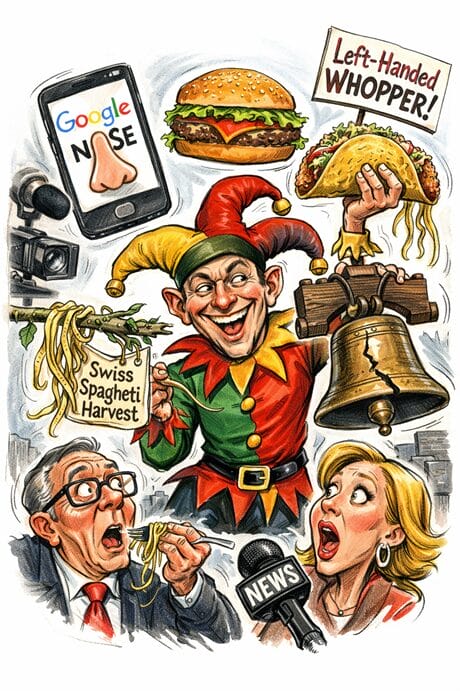
The tradition found its most powerful amplifier in modern media. In 1957, the BBC’s Panorama aired a segment on the “Swiss spaghetti harvest,” showing farmers plucking noodles from trees. Viewers flooded the broadcaster with calls, eager to grow their own pasta crop.
In 1985, Sports Illustrated introduced Sidd Finch, a mythical baseball pitcher who could throw at 168 mph thanks to Tibetan training. Readers demanded his recruitment before realising they’d been duped.
Fast‑food giants too joined the fun: Taco Bell claimed in 1996 to have purchased the Liberty Bell in Philadelphia, while Burger King in 1998 advertised a “Left‑Handed Whopper”, prompting many left-handers to order it at BK’s counters!
Even tech companies embraced the tradition — Google’s “Google Nose” in 2013 promised to let users search by smell.
These pranks were clever, harmless, and often endearing. They showcased wit, creativity, and the ability of media to suspend disbelief.
But they also revealed something more troubling: how easily audiences can be persuaded by authoritative voices.
The spaghetti harvest worked not because it was plausible, but because it was broadcast by the BBC. Authority lent credibility, and credibility silenced scepticism.
That lesson feels especially urgent today. In an era of “fake news,” deepfakes, and viral misinformation, April Fool’s Day is no longer just a day of laughter — it is a cautionary tale.
What was once a playful reminder of human gullibility now underscores the fragility of trust in institutions. The line between satire and deceit has blurred, and the stakes are higher. A prank about pasta trees is charming; a fabricated news story about public health or elections is dangerous.
So, what should April Fool’s Day mean in 2026? Perhaps it is best seen as a cultural mirror. It reflects our appetite for humour, our susceptibility to authority, and our need for critical thinking. The greatest spoofs remind us that laughter can unite, but they make it punchy
These pranks worked because they came from trusted voices. Authority gave absurdity credibility. And that’s the punchline we can’t ignore.
April Fool’s Day is funny, yes — but it’s also a warning. If millions believed in spaghetti trees simply because the BBC said so, what does that say about our vulnerability in today’s digital jungle of fake news, deepfakes, and viral scams?
The best April Fool’s jokes are harmless, witty, and self‑aware. They make us laugh at our own gullibility. But the darker side of deception is never far away.
In an age where misinformation can sway elections, tank markets, or endanger public health, April 1 is more than a day of pranks — it’s a reminder of the fragile line between satire and manipulation.
So, laugh at the spaghetti harvest, smile at the Left‑Handed Whopper, and marvel at Sidd Finch’s impossible fastball.
But remember: the joke is only funny when we know it’s a joke. On every other day of the year, the cost of being fooled is no laughing matter.
WE