By Dr Rahim Said
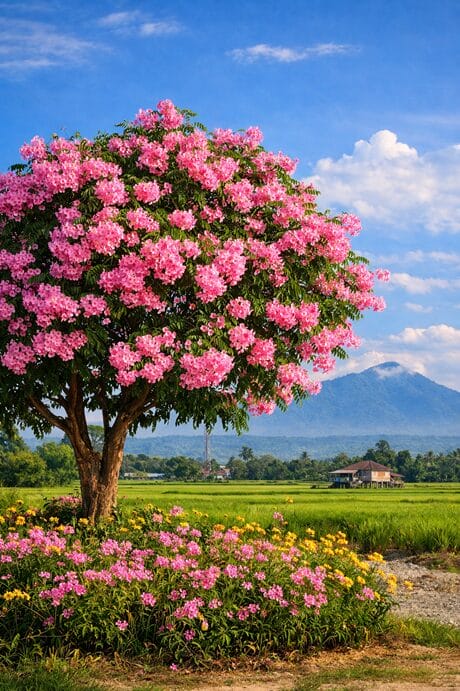
Every March, Alor Setar’s Tacoma trees erupt in a spectacle of pink and white, a fleeting bloom that rivals Japan’s cherry blossoms.
Yet, despite its beauty, the event passes largely unnoticed by national tourism campaigns. The silence is not accidental — it reflects a deeper malaise in Malaysia’s tourism politics, where federal–state tensions often eclipse local wonders.
Kedah is no stranger to being sidelined. Its natural assets — from the endless paddy fields to the limestone majesty of Gunung Keriang, and the cultural heritage of Kuala Kedah — remain under-promoted compared to other states.
The Tacoma bloom is simply the latest casualty of a federal tourism strategy that seems more concerned with political allegiances than with genuine promotion of Malaysia’s diverse landscapes.
The question is not whether Kedah has attractions worth celebrating. It does. The question is why Tourism Malaysia consistently overlooks them. Cynics point to Kedah’s strained relationship with federal authorities, particularly the Tourism Ministry. When politics becomes the lens through which tourism is managed, natural beauty is reduced to collateral damage.
This neglect is costly. Tourism is not just about visitors; it is about identity, pride, and economic opportunity. By failing to promote Kedah’s seasonal bloom, Malaysia misses a chance to diversify its tourism narrative beyond the usual beaches and cityscapes. Worse, it signals to Kedahans that their state’s treasures are expendable in the larger game of federal politics.
But Alor Setar need not wait for federal recognition. The city authorities could seize the initiative by planting more mature Tacoma trees along major roads, expanding the bloom beyond its current pockets.
Imagine Alor Setar transformed into a “Tacoma City” of a million trees, where every street bursts into colour each March. Schools and local communities could be encouraged to cultivate the trees, embedding them into Kedah’s identity and creating a grassroots tourism draw that federal campaigns could no longer ignore.
This is where innovation journalism comes in — not merely describing the bloom, but proposing a civic blueprint. Alor Setar could brand itself as Malaysia’s “Tacoma Capital,” turning a neglected seasonal wonder into a year-round identity.
Festivals, photography competitions, and eco-tourism packages could be built around the bloom. Local entrepreneurs could develop Tacoma-themed crafts, food, and cultural experiences.
By innovating around the trees, the city would not only reclaim its narrative but also force federal tourism authorities to acknowledge what grassroots vision has already achieved.
The Tacoma trees, blooming once a year, become a metaphor for this dysfunction. They arrive in glory, only to fade without recognition, much like Kedah’s tourism potential — dazzling, but ignored. If cherry blossoms can anchor an entire cultural economy in Japan, why can’t Malaysia elevate its own blossoms into a symbol of national pride?
Until federal and state leaders set aside their rivalries, Kedah’s tourism will remain a victim of political crossfire. Yet if Alor Setar embraces the Tacoma bloom as its own, the city could turn neglect into opportunity — proving that beauty, when nurtured locally and innovatively, can outlast politics.