Image Credit: Copilot
By Ravindran Raman Kutty
When I first started driving in Sydney, it felt like a dream in slow motion – a far cry from the swift, sometimes impatient, rhythm of Malaysian roads.
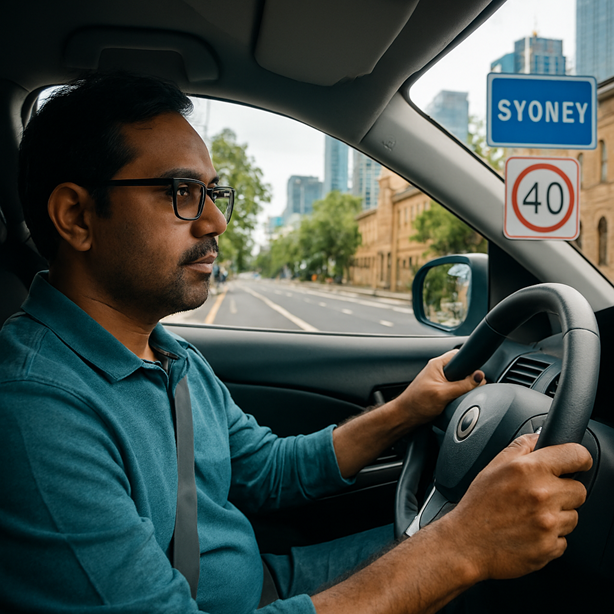
My daughter once joked about Sydney’s speed limits, “Acha, I am pushing my car here,” as we rolled down a quiet Sydney lane at 40km/h (about 25mph), near a school area.
Driving in Sydney offers a striking contrast to the experience on Malaysian roads. With school zones strictly enforced at 40 km/h during school hours — only rising to 60 km/h afterwards — and local streets often capped at 40 to 50 km/h, Sydney’s speed limits demand careful attention and patience.
Even arterial roads and motorways have clear, controlled limits ranging from 60 km/h up to 110 km/h, reinforcing a culture of safety and compliance.
It’s a completely different world altogether. The pace in Sydney may seem slow, but it reflects a culture of safety and compliance.
Enforcement and Integrity
Sydney’s road safety isn’t just about speed signs — it’s about enforcement. Police, often in unmarked cars, penalise offences without leniency. And don’t think of wanting to “settle” a traffic offence! Bribes are unheard of, unlike in Malaysia where corruption remains a challenge. The results are clear: Australia records about 4.1 road deaths per 100,000 people, while Malaysia’s rate is nearly four times higher.
Malaysians Behind the Wheel
Malaysian drivers in Sydney quickly adapt. Seat belts are worn, traffic lights respected, and “kiasu” antics fade away. Heavy fines, demerit points, and zero tolerance for corruption make good driving habitual. The unpredictability of unmarked police cars keeps drivers vigilant, reducing reckless behaviour and fostering a calmer, safer road culture.
Public Transport and Freight
Sydney’s buses and freight operators follow strict rules.
- Buses: Fatal crashes involving buses account for only 1.6% of all road deaths nationwide. Passengers are rarely victims; most fatalities involve pedestrians or other vehicles.
- Freight: Operators must log hours, respect weight limits, and comply with fatigue management rules. Violations risk severe penalties, licence loss, or shutdown.
This discipline contrasts sharply with Malaysia’s more lenient oversight.
Safety Standards
Australia’s transport safety framework includes:
- Mandatory inspections for heavy vehicles.
- Australian Design Rules (ADRs) covering crash avoidance, occupant protection, and stability control.
- Roadside enforcement with random and targeted checks.
- Fatigue management systems limiting consecutive driving hours.
These measures keep vehicles roadworthy and accidents low, setting a benchmark Malaysia could emulate.
Lessons for Malaysia
Sydney shows that safer roads come from:
- Strict enforcement without corruption.
- Regular vehicle inspections.
- A culture of compliance reinforced by visible policing.
Malaysia’s high accident and fatality rates demand similar commitment. Protecting lives requires integrity in law enforcement, disciplined vehicle standards, and responsible driving behaviour. It is a collective responsibility — and one that can save countless lives.
WE