By Dr Rahim Said
For Malaysians, Hat Yai is less a foreign destination than an extension of our own weekend geography. It is where we go for tom yam therapy, budget shopping and the comforting illusion that crossing a border automatically improves the exchange rate and our mood.
That is precisely why the latest advisory to postpone travel to Hat Yai should be taken seriously — not brushed aside with the usual “alah, can manage lah” optimism that has stranded many of us before.
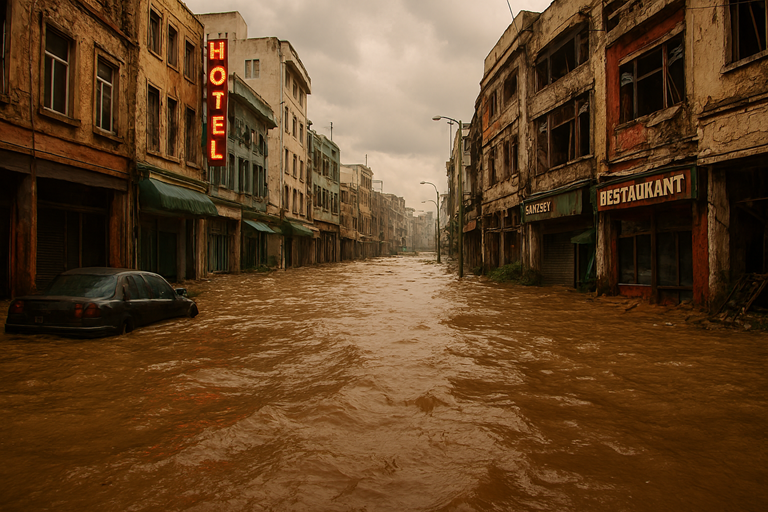
The warning from Malaysia’s Consul General in Songkhla is unusually blunt. Post-flood clean-up is ongoing, heavy vehicles are clogging the city, medical centres are overwhelmed, food premises and tourist attractions remain shut, and post-flood diseases are spreading.
Damage to public property alone is estimated at RM1.3 billion. This is not the usual tropical inconvenience of wet shoes and delayed Grab rides. This is systemic disruption.
The real question Malaysians should ask is not whether Hat Yai will recover — it will — but what are the chances of getting stuck if you insist on going now?
And “stuck” here does not just mean traffic jams or cancelled hotel bookings. It means being caught in a city whose basic services are stretched thin, where medical care is prioritised for locals affected by disaster, and where infrastructure is still in emergency mode.
Floods do not end when the rain stops. Anyone who has lived through floods in Klang Valley, Penang or Kelantan knows the real danger often comes after: contaminated water, food poisoning, leptospirosis, dengue, skin infections and respiratory issues.
When medical centres are already “very busy and have little capacity”, becoming a patient is no longer a minor inconvenience — it becomes a risk multiplier.
Travel insurance will not magically create hospital beds.
Then there is the issue of mobility. Clean-up operations mean lorries, excavators and debris removal trucks everywhere. Roads that look passable in Google Maps reality may be narrowed, closed or diverted at short notice. Public transport runs on reduced reliability.
Border crossings, already notorious during peak Malaysian travel seasons, can become chokepoints when regional movement is disrupted. Getting in may be possible; getting out on schedule is another matter altogether.
For families, elderly travellers or those with children, the risk calculus becomes even harsher. What happens if a child falls ill in a city where clinics are overwhelmed? What happens if your hotel loses water pressure or power intermittently?
These are not hypothetical scare scenarios; they are common post-disaster realities.
There is also an ethical dimension we Malaysians are not particularly fond of confronting. Disaster-hit cities do not need an influx of bargain-hunting tourists competing for limited food, transport and medical attention.
They need time, space and resources to recover. Showing “support” by turning up with shopping bags and Instagram stories may feel good, but it can unintentionally burden a city still trying to get back on its feet.
Some will argue that advisories are always conservative, that Hat Yai depends on tourism, and that businesses will suffer if Malaysians stay away.
That is true — but timing matters. Visiting during recovery, when attractions are closed and services are strained, helps neither tourists nor locals.
A postponed trip is not a cancelled one; it is a deferred contribution to an economy that will benefit more once normalcy returns.
Malaysians have an unfortunate habit of treating official warnings as mere suggestions, especially when they clash with long weekends and hotel promotions.
We have seen this mentality during monsoon seasons, haze episodes and flash floods back home. The result is usually predictable: complaints, viral videos, demands for consular assistance and, eventually, the same people asking why authorities did not “warn properly”.
This time, the warning has been given clearly. Hat Yai will still be there in a few months, with cleaner streets, open restaurants and functioning hospitals.
The question is whether we choose patience over impulse — or insist on learning, yet again, that floods do not respect travel itineraries.
Sometimes the smartest travel decision is not about finding the cheapest deal, but knowing when not to go.
WE